
 Electric cryo chamber
 Thermo-contrast application
 Ice bath 2.0
 Dry Floating
 Mechanical lymphatic drainage
 IHHT altitude training
 HBOT Oxygen chamber
 Red Light Therapy
 Photobiomodulation
 Cell regeneration application
 HaloCab Human Supercharger
 Salt and red light therapy
 Vibroacoustics
 Electromag. Pelvic floor training
  Frequency ultrasound
 iFlow Vascular Training
 Back therapy system
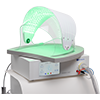 Dermio Care Plus
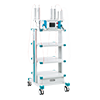 Endolaser
 WeberBrain
 Body analysis
 FRAS 5
 Lounge equipment
 Mobile HRV measurement
Artificial intelligence is becoming an important tool in longevity medicine because this field depends on large, complex health data that are difficult to interpret with traditional methods alone. Used well, AI can support earlier risk detection, sharper pattern recognition, and more personalized prevention strategies. Used poorly, it can create false confidence, weak recommendations, and compliance risks.
For clinics, health innovators, and operators developing future-focused longevity concepts, the real question is not whether AI sounds promising. It is where AI adds practical value, where human clinical judgment remains essential, and what must be validated before AI-informed workflows can be trusted.
What AI means in the context of longevity medicine
In longevity medicine, AI usually refers to machine learning systems that analyze health-related data to detect patterns, estimate risk, support stratification, or help identify response signals over time. The goal is not simply to extend lifespan. It is to improve healthspan by making preventive and personalized decisions more informed.
This matters because longevity medicine combines inputs that rarely sit neatly in one place. A person may generate clinical lab results, imaging, functional testing, lifestyle tracking, wearable signals, recovery data, and longitudinal history. AI can help connect these layers faster than manual review alone, especially when the objective is early intervention rather than treatment after clear disease onset.
Where AI can add the most value
Biomarker interpretation
One of the most relevant applications is the analysis of biomarkers linked to aging, metabolic function, inflammation, recovery, and resilience. AI can help detect relationships across multiple variables instead of treating each result in isolation. That makes it more useful for pattern recognition than for single-value interpretation. For example, objective oxidative stress metrics from FRAS-5 redox analysis can be integrated into AI-based biological age and risk assessments.
Risk stratification and early prevention
Longevity medicine is strongly prevention-oriented. AI models can support earlier identification of risk clusters by combining medical history, routine diagnostic solutions, and longitudinal trends. In practice, that can help prioritize who may need closer follow-up, additional testing, or a more individualized prevention plan.
Personalized recommendations
AI is often discussed in relation to personalization because it can process more variables than a manual rule-based approach. In a longevity setting, that may support more tailored decisions around monitoring frequency, preventive focus areas, or the interpretation of changing health signals over time. It should not be treated as a substitute for a clinician or qualified health professional.
Drug discovery and aging research
Outside day-to-day operations, AI is also used in aging research to accelerate target discovery, compound screening, and hypothesis generation. This is one reason artificial intelligence in longevity medicine receives so much attention. It influences not only care pathways, but also the upstream research that may shape future interventions.
Why AI is especially relevant in longevity medicine
Longevity medicine is highly data-dense and inherently longitudinal. Many of its most important questions are not binary. They involve trends, interactions, and trajectories:
- How is someone changing over time?
- Which markers matter together, not just separately?
- Which people may benefit from earlier preventive action?
- Which signals are meaningful and which are noise?
These are exactly the kinds of problems where AI can be useful. The value comes less from replacing expertise and more from supporting scalable analysis across many interacting data points.
What AI cannot do on its own
AI does not automatically make longevity medicine more accurate, safer, or more scientific. Results depend on the quality of the data, the relevance of the model, the population it was trained on, and the way outputs are interpreted in practice.
Important limits include:
- Data quality issues – incomplete, biased, or inconsistent inputs can lead to unreliable outputs
- Weak clinical validation – a model may perform well statistically without being ready for real-world decision support
- Overpersonalization claims – not every AI-generated recommendation is clinically meaningful
- Lack of explainability – some systems produce outputs that are difficult to interpret or justify
- Compliance and privacy risks – sensitive health data require careful governance, especially in the EU
That is why credible AI use in longevity medicine requires more than innovation language. It requires validation, governance, and a clear understanding of where software supports care versus where regulated medical decision-making begins.
Clinical relevance depends on implementation, not hype
The strongest use case for AI in longevity medicine is not a vague promise of anti-aging optimization. It is the disciplined use of data analysis to support better preventive workflows, better patient segmentation, and more informed interpretation of complex inputs.
For organizations building longevity-related services, this has practical implications. Before introducing AI into a clinical or wellness concept, it is worth clarifying:
- What problem is the system solving?
- Which data sources are being used? This may include comprehensive body analysis, biomarker panels, wearable tracking, or mobile HRV measurement.
- How reliable and interpretable are the outputs?
- Who remains responsible for final decisions?
- How are data protection and regulatory obligations handled?
These questions matter as much as the technology itself. In a field as commercially active as longevity, strong positioning comes from sound implementation, not from overstated claims.
What this means for providers exploring longevity concepts
Many clinics, wellness operators, and health-focused businesses are interested in data-driven longevity services, but AI should be approached as one possible layer within a broader concept, not as a shortcut to credibility. A strong offering still depends on sound diagnostics, clear workflows, qualified interpretation, and realistic claims.
For businesses evaluating future-oriented health concepts, the key is to separate genuine operational value from trend-driven noise. That usually means assessing the technology, the business model, the compliance framework, and the user experience together rather than treating AI as a standalone selling point.
FAQ
Will AI improve longevity?
AI may improve longevity medicine by helping professionals analyze complex health data, detect risk patterns earlier, and support more personalized prevention strategies. It does not improve longevity by itself. Its impact depends on data quality, clinical validation, and responsible use.
How is AI used in longevity medicine today?
Current use is most relevant in data analysis, biomarker interpretation, risk stratification, personalization support, and aging-related research. Some of the most mature value comes from identifying patterns across multiple health inputs rather than relying on isolated test results such as oxidative stress assays.
Can AI replace doctors or clinical judgment in longevity care?
No. AI can support analysis and workflow efficiency, but it should not replace clinical judgment. Longevity medicine still requires human interpretation, patient context, and responsibility for final decisions.
What are the main risks of using AI in longevity medicine?
The main risks include poor data quality, biased models, weak validation, low transparency, and privacy or regulatory issues. These risks are especially important when sensitive health data are involved or when AI outputs influence decisions presented as health guidance.
Readers interested in the broader clinical and strategic context can take a practical next step and start your analysis.