
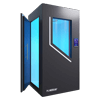
 Electric cryo chamber
 Thermo-contrast application
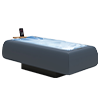 Ice bath 2.0
 Dry Floating
 Mechanical lymphatic drainage
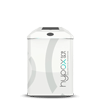 IHHT altitude training
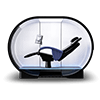 HBOT Oxygen chamber
 Red Light Therapy
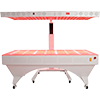 Photobiomodulation
 Cell regeneration application
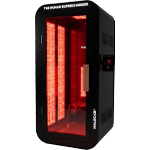 HaloCab Human Supercharger
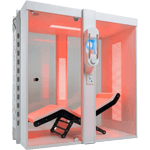 Salt and red light therapy
 Vibroacoustics
 Electromag. Pelvic floor training
 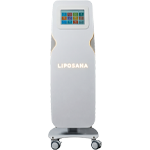 Frequency ultrasound
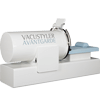 iFlow Vascular Training
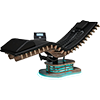 Back therapy system
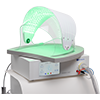 Dermio Care Plus
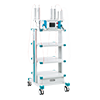 Endolaser
 WeberBrain
 Body analysis
 FRAS 5
 Lounge equipment
 Mobile HRV measurement
An HRV tracker helps you measure heart rate variability, the small timing differences between heartbeats that can offer useful insight into recovery, stress load, and autonomic balance. If you want to track HRV reliably, the most important factors are not just the device itself, but also the sensor technology, measurement consistency, and how the data is interpreted. This guide explains the essentials so you can understand what an HRV tracker does, where different systems are useful, and what to look for before choosing one.
What is an HRV tracker?
An HRV tracker is a device or system that records the intervals between heartbeats and analyzes how much those intervals vary. Unlike a standard heart rate monitor that mainly shows beats per minute, HRV tracking focuses on beat-to-beat variation. That makes it useful for observing how your body responds to training, stress, sleep, recovery, and general physiological load.
In practice, HRV is often used to support:
- Recovery monitoring after exercise or intensive activity
- Stress observation in daily life or treatment settings
- Readiness assessment before training or performance sessions
- Biofeedback applications where real-time response matters
- Longitudinal health tracking when trends are more important than single readings
An HRV value should never be read in isolation. Day-to-day context matters, and the real value comes from consistent measurement over time.
How HRV tracking works
Every HRV tracking device tries to identify the exact timing between heartbeats, also called inter-beat intervals. The cleaner and more precise that timing data is, the more useful the HRV analysis becomes.
Most systems use one of two approaches:
- Electrical measurement through a chest strap sensor that detects the heart’s electrical activity
- Optical measurement through a wearable that estimates pulse timing using light-based sensors
For HRV, timing accuracy matters more than for simple heart rate display. That is why chest strap based systems are commonly preferred when the goal is focused HRV analysis rather than general wellness tracking.
Reliable HRV measurement also depends on method. Readings taken under similar conditions, such as at the same time of day and in a similar physical state, are usually more meaningful than irregular spot checks.
Why the device type matters
Not every heart rate wearable is equally suitable as an HRV tracker. The right choice depends on whether you want convenience, higher measurement quality, or integration into a broader health or performance workflow.
Chest strap HRV trackers
Chest strap systems are typically the strongest option when accurate HRV measurement is the priority. They are widely used in structured testing, performance settings, and professional workflows because they capture heartbeat intervals with high precision.
This type of setup is especially useful when you need:
- Repeatable short measurements under defined conditions
- Higher confidence in HRV analysis
- Structured reporting for coaching, screening, or client monitoring
- Real-time HRV biofeedback in selected applications
Watch and wrist-based HRV tracking
Watches and wrist wearables are convenient because they can collect data throughout the day or night. They are often used for broad wellness tracking, sleep trends, and general stress or recovery dashboards. Their strength is ease of use, but that convenience can come with more signal noise and less control over measurement conditions.
For many users, a watch can be enough for simple trend awareness. For more focused HRV analysis, a dedicated measurement system is usually the better fit.
Integrated HRV systems
In some settings, HRV is not the main device category but part of a larger therapeutic or biofeedback system. This can be valuable when HRV monitoring is used during applications where real-time physiological response adds context, rather than as a standalone consumer tracking feature.
What makes an HRV tracker useful
A good HRV tracker is not defined by marketing language or the size of its dashboard. It is useful when it helps you collect consistent, interpretable data and apply it in a practical way.
Key selection criteria include:
- Measurement quality – Can the system capture beat-to-beat intervals cleanly enough for HRV analysis?
- Consistency – Can you repeat the measurement under similar conditions?
- Software clarity – Are the results understandable and usable?
- Reporting – Can data be reviewed, exported, or documented in a structured format if needed?
- Use case fit – Is the setup intended for occasional wellness tracking, regular performance monitoring, or professional application?
In professional environments, the workflow around the device often matters as much as the hardware itself. A system that combines sensor, software, and reporting can be more useful than a standalone wearable with limited interpretation.
How to track HRV in a meaningful way
If you want your HRV tracker to provide useful insight, the measurement routine matters. The most common mistake is reacting too strongly to a single low or high reading. HRV naturally changes, so trends are more informative than isolated values.
Good practice usually includes:
- Measure consistently at similar times and under similar conditions
- Look for patterns across days and weeks, not one-off values
- Consider context such as sleep, training, workload, illness, or alcohol
- Use HRV as one signal rather than the only decision-making factor
This is especially important if HRV is being used in performance, recovery, or wellness programs. Data becomes more valuable when it is interpreted alongside the broader picture, including metrics from body analysis and oxidative stress via FRAS-5 redox analysis.
Professional HRV measurement setups
For clinics, performance facilities, recovery concepts, and wellness operators, a simple consumer wearable is not always enough. In these settings, the goal is often a more structured process that supports assessment, documentation, and integration into a broader service model.
HF Concepts works in the field of longevity and health technology integration and focuses on professional, manufacturer-independent solutions rather than consumer gadget recommendations. In the HRV area, this includes confirmed solutions such as a mobile HRV measurement setup with a high-resolution chest strap, software-based analysis, and PDF reporting. HRV monitoring is also available as an integrated feature within selected systems used for biofeedback-oriented applications.
That kind of setup can be relevant when you want to:
- Offer HRV analysis as part of a professional service
- Use standardized measurement workflows
- Combine HRV data with broader regeneration or wellness concepts
- Evaluate where HRV fits commercially and operationally in your facility
Because implementation quality matters, the question is often not just which HRV tracker to buy, but how the technology should be embedded into a viable service concept with the right diagnostic solutions.
Choosing the right HRV tracker for your goal
The best HRV tracker is the one that matches your actual use case.
| Goal | What usually matters most | Suitable direction |
|---|---|---|
| Basic personal trend tracking | Convenience and regular use | Wearable with HRV feature |
| More focused recovery monitoring | Measurement consistency and cleaner data | Chest strap based setup |
| Professional assessment or reporting | Structured workflow, software, documentation | Dedicated HRV measurement system |
| Real-time use during applications | Integration and live biofeedback | Integrated HRV-enabled system |
If you are planning a professional offering, it also makes sense to evaluate operational fit, staff handling, client experience, data output, and business viability before selecting a system.
FAQ
Is it worth tracking HRV?
Yes, if you use it as a trend-based metric rather than a single score. HRV tracking can be helpful for understanding recovery, stress load, and readiness, especially when measurements are taken consistently.
Can a watch track HRV?
Yes, many watches can track HRV through optical sensors. For general wellness and trend monitoring this can be useful, but for more focused HRV analysis, a chest strap based system is often the stronger option.
Is 37 a low HRV?
A number on its own is not enough to judge. HRV varies between individuals and depends on factors such as age, training status, sleep, stress, and measurement method. Your own baseline and longer-term trend are usually more meaningful than comparing one value to someone else’s.
What is the best way to track HRV?
The best way is to use a reliable measurement method and repeat it under similar conditions. If accuracy is important, a dedicated chest strap based HRV setup is typically preferred over casual, irregular measurements from general wearables.
If you are evaluating HRV tracking for a clinic, performance center, wellness concept, or regeneration offering, a manufacturer-neutral view is often the best starting point. The right solution depends on how HRV will actually be used, measured, interpreted, and integrated into your overall concept. For advanced interpretation and predictive approaches, AI in longevity medicine can also be relevant. If you want to explore the next step directly, you can start your analysis.