
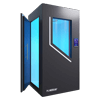
 Electric cryo chamber
 Thermo-contrast application
 Ice bath 2.0
 Dry Floating
 Mechanical lymphatic drainage
 IHHT altitude training
 HBOT Oxygen chamber
 Red Light Therapy
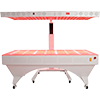 Photobiomodulation
 Cell regeneration application
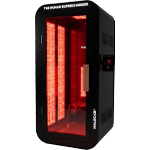 HaloCab Human Supercharger
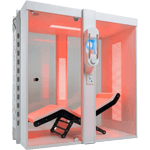 Salt and red light therapy
 Vibroacoustics
 Electromag. Pelvic floor training
 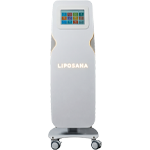 Frequency ultrasound
 iFlow Vascular Training
 Back therapy system
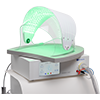 Dermio Care Plus
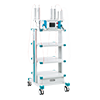 Endolaser
 WeberBrain
 Body analysis
 FRAS 5
 Lounge equipment
 Mobile HRV measurement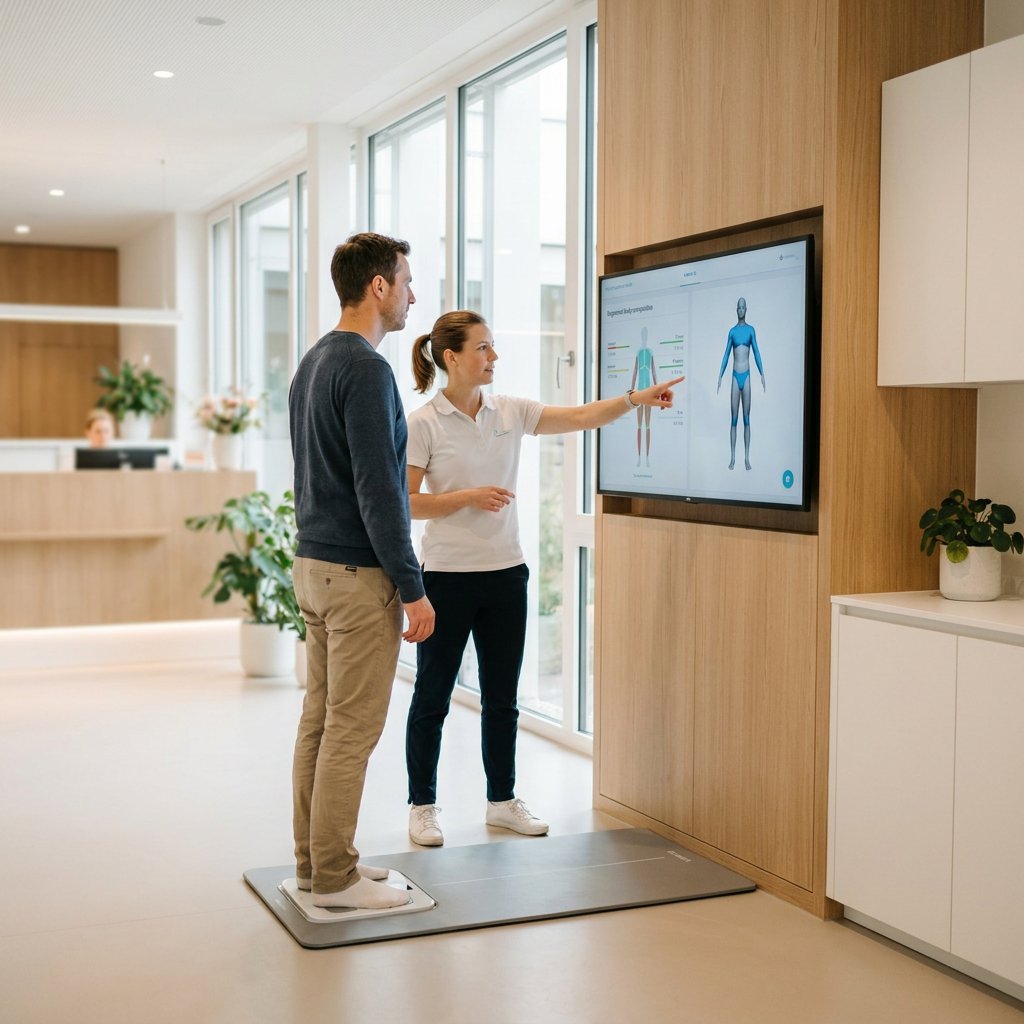
Body Composition Analysis
Body composition analysis gives you a more useful picture than body weight alone. Instead of showing just one number on a scale, it helps break down how your body is composed, including fat mass, lean mass, water balance, and related health indicators. That makes it valuable for performance, preventive health, and data-based coaching.
For providers in fitness, wellness, and healthcare, body composition analysis can also be a practical way to make assessments more relevant and measurable. Modern solutions range from bioelectrical impedance analysis to contactless 3D body analysis systems that capture body values quickly and support a broader view of client status and progress.
What body composition analysis includes
A body composition analysis is designed to assess how total body weight is distributed across key components rather than treating weight as a standalone marker. Depending on the system used, results may include several of the following values:
- Body fat percentage – the proportion of your body weight made up of fat
- Lean mass – non-fat mass such as muscle, organs, and other fat-free tissue
- Body water – an important factor in how many body composition systems estimate tissue distribution
- Weight and BMI – useful as reference points, but more meaningful when interpreted alongside composition data
- Waist-to-hip ratio – often used as an added indicator for body fat distribution
- FFMI – fat-free mass index, which helps relate lean mass to height
On HF Concepts’ body analysis page, confirmed solutions include contactless 3D body analysis and diagnostic systems that can collect relevant body values and support a broader assessment view.
Why body composition analysis matters more than weight alone
Two people can have the same body weight and a very different physical profile. One may carry more muscle mass, while the other may carry more body fat. A normal BMI can also hide an unfavorable distribution of fat and lean tissue. That is why body composition data is often more useful than weight alone when you want to understand progress, current condition, or baseline status.
In practical terms, body composition analysis can help with:
- Tracking fat loss more accurately instead of relying only on changes on the scale
- Monitoring muscle development during training or recovery phases
- Supporting preventive health screening with more context than BMI alone
- Improving coaching conversations through measurable, easier-to-explain data points
- Creating a clearer starting point for wellness, performance, or lifestyle programs
This is one reason body composition testing is widely used across gyms, performance centers, wellness concepts, and health-oriented facilities.
How bioelectrical impedance analysis works
One of the most common methods is bioelectrical impedance analysis, often shortened to BIA. This method uses a low electrical current to estimate body composition based on how body tissues conduct that signal. Because water-rich tissues conduct differently than fat tissue, the system can calculate estimated values for body fat, lean mass, and related metrics.
BIA is popular because it is fast, non-invasive, and practical for repeat testing. It is especially useful when the goal is to track changes over time under consistent testing conditions.
Another non-invasive metric that complements composition insights and recovery tracking is mobile HRV measurement.
HF Concepts also confirms diagnostic solutions that use bioelectrical impedance analysis for body composition and performance-related data.
Like any analysis method, BIA results should be interpreted in context. Hydration status, timing, and measurement consistency can influence readings, which is why trend tracking is usually more valuable than focusing on a single isolated result.
Which body composition metrics are most useful
Not every metric has the same value for every use case. The most useful outputs are usually the ones that help answer a real decision-making question. To add oxidative stress context to body composition results, many facilities complement routine testing with FRAS 5 redox analysis.
Body fat percentage
This is often the first value people look for in a body composition test. It can be more informative than body weight when the goal is fat reduction, body recomposition, or general health screening.
Lean mass and fat-free mass
These values help show whether progress is coming from muscle retention or muscle gain rather than from weight change alone. In training and recovery settings, this can be more actionable than scale weight.
Body water
Body water plays an important role in many BIA-based calculations. It can also add context when interpreting changes across repeated scans.
Waist-to-hip ratio
This metric can be useful as an additional marker related to body fat distribution and general risk orientation, especially when used together with other body values.
FFMI
Fat-free mass index adds perspective to lean mass by relating it to height. In performance and physique-focused settings, it can be a helpful comparison value.
Common body composition analysis methods
There is no single method for measuring body composition. Different systems vary in speed, cost, accessibility, and depth of output.
| Method | What it does well | Main limitation |
|---|---|---|
| Bioelectrical impedance analysis | Fast, practical, repeatable, widely used | Results can be influenced by testing conditions |
| Contactless 3D body analysis | Quick visual and metric-based overview, posture and balance insights, no physical contact | Output scope depends on the specific system |
| DEXA | Detailed reference-grade assessment | Higher cost and lower accessibility |
| Skinfold calipers | Low cost and portable | Strongly dependent on operator technique |
For most commercial wellness and performance environments, the best method is usually the one that balances speed, usability, repeatability, and client experience.
What a good body composition analysis should deliver
A good body composition analysis should do more than produce numbers. It should create useful insight that can be applied in a real health, fitness, or wellness setting.
- Clear output that clients and staff can understand quickly
- Consistent repeat testing so progress can be monitored over time
- Relevant metrics such as body fat percentage, BMI, waist-to-hip ratio, and lean mass indicators
- Efficient workflow that fits into consultations, onboarding, or assessments
- A strong user experience that supports engagement rather than adding friction
That is why many facilities look beyond a standard body fat analyzer or consumer smart scale and instead evaluate professional body composition analyzer solutions that fit their concept, audience, and service model.
Body composition analysis in modern facility concepts
Body composition analysis can play different roles depending on the business model. In a fitness or performance environment, it can support onboarding, progress checks, and coaching. In wellness and preventive settings, it can strengthen baseline assessments and help make services feel more personalized and measurable.
HF Concepts focuses on integrating advanced health and wellness technologies into viable service concepts. Within this topic, that includes solutions such as contactless 3D body analysis and diagnostic systems like mescan and checkpoint. The focus is not just on a device itself, but on how body analysis can be positioned and used meaningfully within a wider health, performance, or longevity offering.
For clinics and facilities that want a tailored plan for equipment and implementation, you can start analysis to outline goals and receive a recommendation.
FAQ
What is a good body composition analysis?
A good body composition analysis provides reliable, easy-to-understand data that goes beyond body weight alone. It should deliver relevant metrics, allow repeat testing under consistent conditions, and support practical decisions in coaching, wellness, or preventive health settings.
What does the body composition analysis include?
Depending on the system, it may include body fat percentage, lean mass, body water, weight, BMI, waist-to-hip ratio, and FFMI. Some solutions also add posture, balance, or visual body mapping elements.
Is bioelectrical impedance analysis accurate?
BIA can be very useful for routine body composition testing, especially when measurements are repeated under similar conditions. It is best used for trend monitoring and structured follow-up rather than treating one single reading as a final judgment.
What is the difference between a body composition analysis and BMI?
BMI is a simple ratio of weight to height. Body composition analysis goes further by estimating how that weight is distributed across fat, lean tissue, and related values, which makes it far more useful for progress tracking and practical interpretation.