
Published on 20. November 2026
Point-of-Health Diagnostics in the Operator Check: Results Without a Lab

Oskar Filenius
Short answer
Point-of-health diagnostics brings quantitative biomarker measurement into your own facility: a drop of capillary blood goes onto a test cassette, and a compact reader returns the result in three to fifteen minutes depending on the parameter. For operators the device is not what decides it. Three questions come first: who may take the sample, where do flagged values go, and what does each measurement consume.
At a glance
Sample material
capillary blood, a few microlitres from the fingertip
Time to result
3–15 minutes depending on the test
Technology
one reader, a dedicated cassette per parameter
Floor space
desktop device, around one square metre of working surface
Staff time
3–5 min. sampling, analysis runs unattended
Total appointment
20–35 minutes including the results conversation
Running costs
cassette, lancet, capillary, gloves and sharps disposal per test
Not included
medical interpretation or diagnosis
What is point-of-health diagnostics in daily operation?
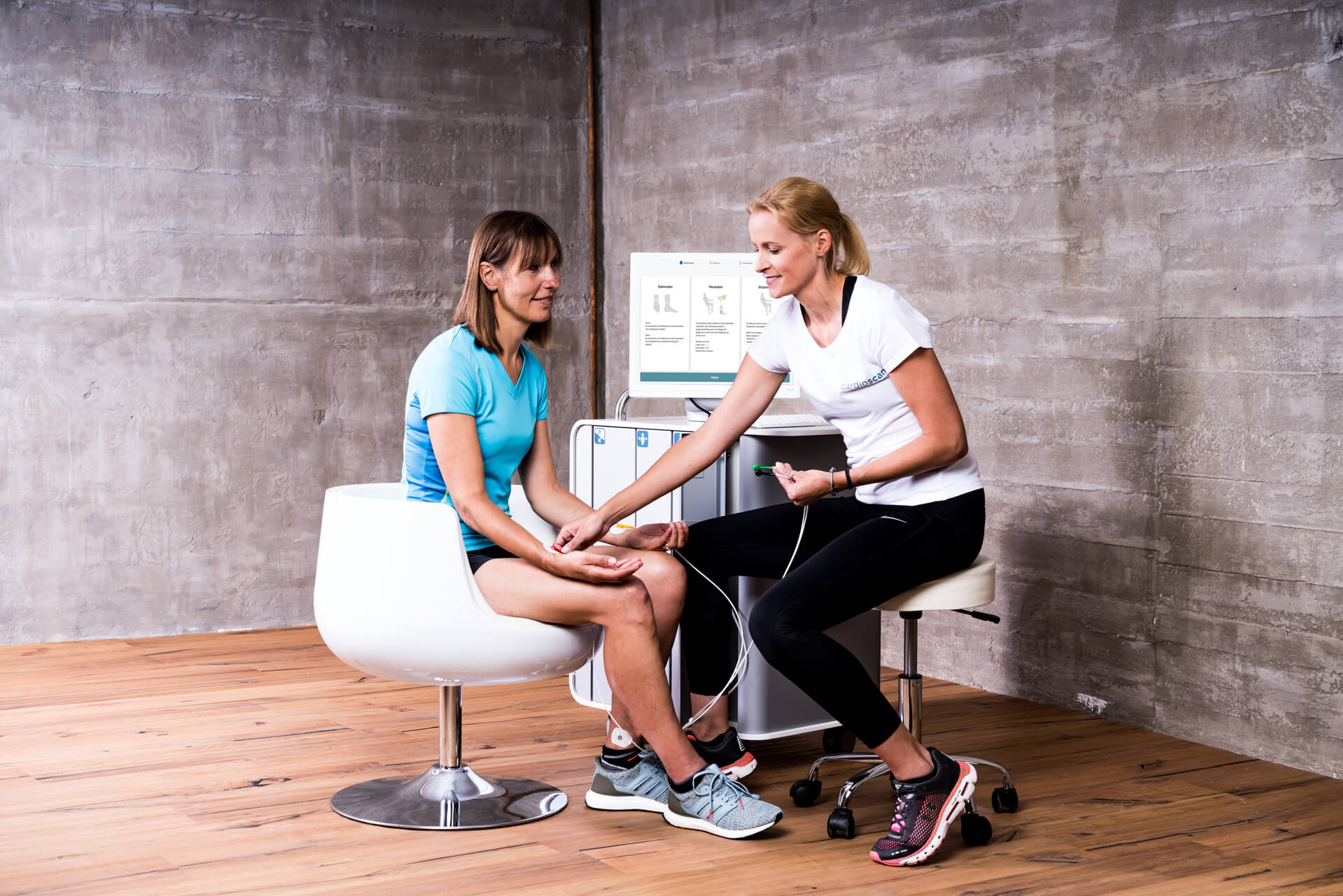
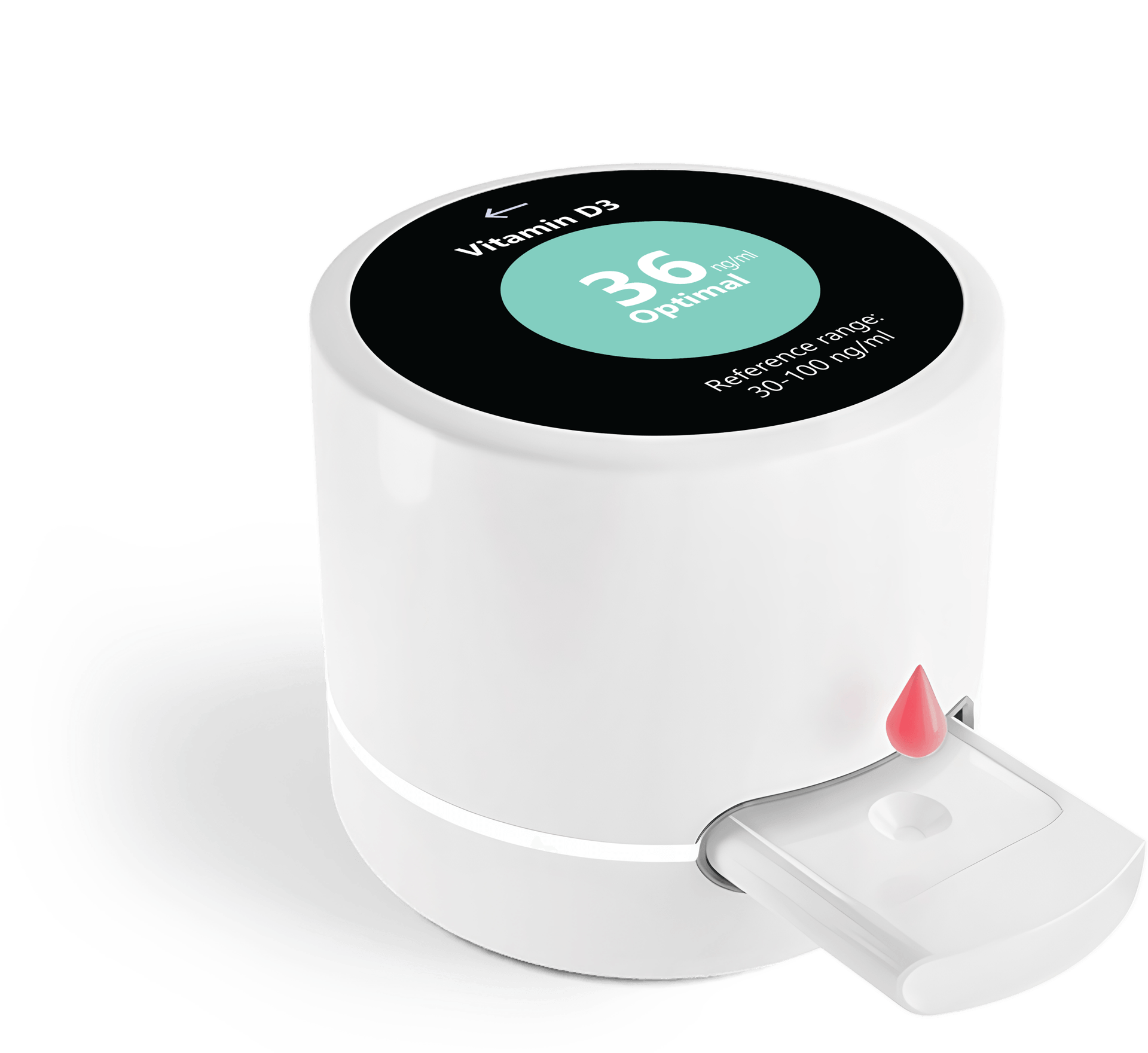
The procedure is short. Disinfect the fingertip, apply the lancet, draw a few microlitres of capillary blood, transfer it onto the test cassette, slide the cassette into the reader. Depending on the parameter the result appears on the display and in the digital record after three to fifteen minutes. No shipping to a lab, no waiting until the next appointment.
The technology behind it is microfluidics: the cassette guides the sample along defined channels, the reader measures quantitatively and calibrates itself. For the business this means one thing above all, one device covers many parameters, but every parameter has its own cassette with its own price and its own shelf life.
What the technology does not deliver is interpretation. A number without a conversation is worthless to the client and a risk to you. In operational terms the measurement is therefore not a device but an appointment.
Who is actually allowed to take the blood sample?
This question comes before the offer, not after it. Taking capillary blood is an intervention on the body. It requires valid, documented consent, and it requires that the person performing it is permitted to do so.
Inside a medical practice the situation is settled: sampling can be delegated to qualified staff while interpretation stays with the physician. Outside regulated medical practice it becomes a case-by-case question, and the answer depends on the purpose of the measurement. Collecting values in order to identify illness falls within medical practice regardless of what the offer is called. Collecting baseline and progress values within a training or nutrition programme is judged differently, but not automatically so.
Settle this before you buy, in writing, with someone who carries liability for the answer. A verbal assurance during a sales conversation is not legal advice. Check your insurance cover at the same time: some liability policies exclude procedures performed on people.
How long does an appointment with a measurement take?
Calculate the appointment, not the measurement. Sampling takes three to five minutes, the analysis then runs unattended, and the conversation about the result needs ten to fifteen minutes. That makes an appointment of twenty to thirty-five minutes, with your staff tied up for roughly half of it.
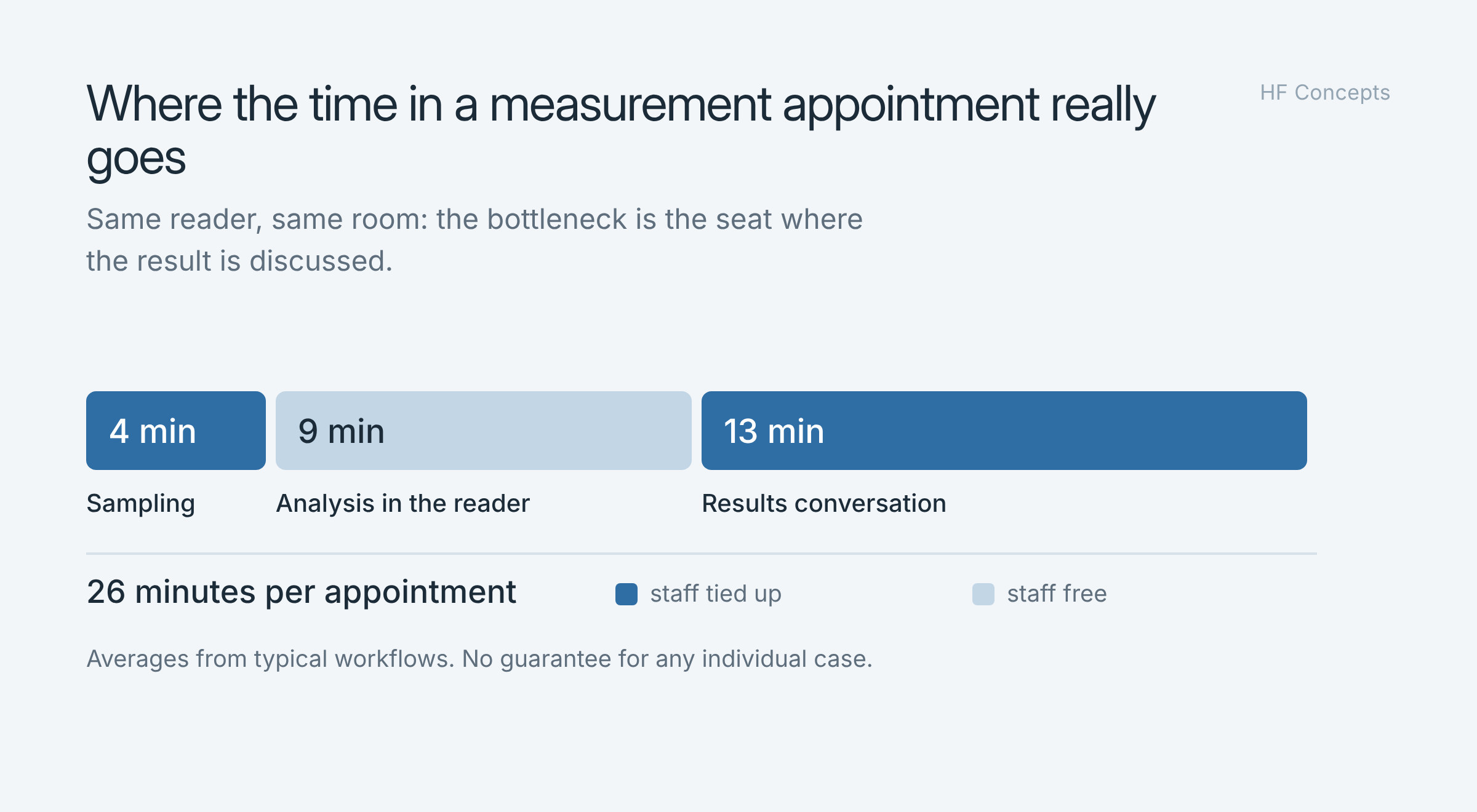
That leads to a planning rule: anyone who wants to run two measurements in parallel does not need a second reader but a second seat and someone to do the talking. Turn that around and you are buying hardware to solve a staffing problem.
What does a single measurement cost?
| Item | What sits behind it | Note |
|---|---|---|
| Reader | one-off purchase, covers several parameters | well below the investment required for an application cabin |
| Test cassette | one per measurement and per parameter | the largest running item, ask for volume pricing |
| Single-use material | lancet, capillary, gloves, swab, plaster | calculate per measurement, not per month |
| Disposal | approved sharps container | clarify the disposal route before the first test |
| Staff time | 3–5 min. sampling plus 10–15 min. conversation | the conversation is the real cost block |
| Storage | cassettes are temperature-sensitive and expire | budget for expiry if you measure infrequently |
The honest calculation rests on three numbers you should request from the manufacturer and then check yourself: price per cassette, price of the single-use material, and staff minutes tied up. Only then can you tell whether a measurement works as a standalone service or only as part of a programme.
What happens when a value is out of range?
Any series of measurements eventually produces a value that does not fit. That moment decides your reputation. Decide in advance what happens then and write it down: which value triggers which response, who speaks to the client, in what words, and who they are referred to.
Three sentences need to be second nature in any facility without medical supervision: this is not a diagnosis; this value lies outside the stated reference range; please have it checked by a doctor. Everything beyond that, causes, recommendations, supplements, does not belong in the conversation.
Which hygiene obligations come with it?
With the first drop of blood your facility becomes a place where potentially infectious material is handled. That brings obligations a wellness or studio operation has not had to deal with: gloves, surface disinfection, an approved sharps container, documented staff instruction and a hygiene plan that covers the sampling step.
None of this is demanding. But all of it has to be in place before the first client, not after the first question. Ask your employers' liability insurance association about the requirements for work involving blood before you order the reader, not once it arrives.
Where do the measured values belong?
Measured values are health data and therefore fall under the special categories of personal data. They require their own explicit consent, the general client consent on your registration form does not cover them.
In practice there are four questions to answer: where are the values stored, who has access, how long are they kept, and what happens when a client requests deletion. If the manufacturer supplies a cloud service, the contract needs to state which country the data sits in and who acts as processor.
Which facility type does the measurement pay off for?
| Facility type | Role in the offering | Prerequisite |
|---|---|---|
| Private practice | baseline and progress tracking inside the treatment plan | qualification in place, escalation route settled internally |
| Longevity centre | entry point into a programme, review after 8–12 weeks | medical backup agreed in writing |
| Gym | only viable with a medical partner | blood sampling is not part of studio routine |
| Hotel & resort | hard to sustain, the guest is there once | without a follow-up the measurement stays a souvenir |
The measurement is strong wherever there is a second time. A baseline value without a follow-up is an experience, not a programme. The technology therefore pays off where clients return anyway: in a practice, in a longevity centre, in facilities with memberships.
How other measurement methods fit into the daily routine is shown in the posts on the FRAS 5 redox analysis workflow and on HRV measurement. If you are only now building a longevity offering, the sensible order is described in starting a longevity centre.
HF Concepts Check: how we rate point-of-health diagnostics by facility type
- Client benefit
- Plausibility & regulation
- Target group fit
- Investment
- Marketability
- Integration
- Time & staff
- Earnings
- Differentiation
- Client benefit
- Plausibility & regulation
- Target group fit
- Investment
- Marketability
- Integration
- Time & staff
- Earnings
- Differentiation
- Client benefit
- Plausibility & regulation
- Target group fit
- Investment
- Marketability
- Integration
- Time & staff
- Earnings
- Differentiation
- Client benefit
- Plausibility & regulation
- Target group fit
- Investment
- Marketability
- Integration
- Time & staff
- Earnings
- Differentiation
Our assessment after reviewing the technology, based on typical facilities of each type. No guarantee for any individual case.
Investment and client benefit are the strongest values: a desktop device costs little floor space, and a measured value in conversation changes the quality of advice immediately. Plausibility & regulation drops because outside medical practice the qualification question stays open until you settle it. Time & staff is the underestimated value: it is not the measurement that ties up time, it is the conversation afterwards.
Common mistakes we see in projects
- Reader bought, legal question open: the device is installed, the answer on qualification is missing, and the service launches anyway.
- Measurement sold without a follow-up: a single value with no second appointment creates no retention and does not justify the effort.
- Cassettes bought in bulk: the volume discount expires with the shelf life when demand falls short of the plan.
- Values handed over without conversation time: a printout in the client's hand without interpretation is the fastest route to questions nobody is allowed to answer.
- Flagged value with no defined route: anyone deciding in the moment how to phrase it and where to refer will phrase it wrongly.
Conclusion
Point-of-health diagnostics is the most accessible technology in this series and the most demanding in everything around it. The device costs little space and little time. What it costs is clarity: about qualification, about handling values out of range, and about whether your clients come back a second time.
If you can answer those three points, the measurement is one of the strongest entry points into a programme you can offer. If you cannot, you are selling numbers without consequence. Manufacturer details and available parameters are on the product page point-of-health diagnostics.
Frequently asked questions
How long does a measurement take?
Sampling takes three to five minutes and the result is available after three to fifteen minutes depending on the parameter. Including the results conversation, plan for an appointment of twenty to thirty-five minutes.
Who may take the blood sample?
Inside a medical practice capillary sampling can be delegated to qualified staff. Outside regulated medical practice it is a case-by-case question that depends on the purpose of the measurement. Obtain binding legal advice before you buy.
How much space does the reader need?
Around one square metre of working surface is enough. It is a desktop device running off a standard socket and needs no dedicated room, but it does need a place where the result can be discussed undisturbed.
What does a single measurement cost?
The test cassette is the largest item, followed by single-use material, disposal and staff time. Ask for volume pricing per parameter and include the staff minutes, otherwise half the cost is missing from your calculation.
What do you do with a value out of range?
State the value, point to the reference range, advise a medical check, and stop there. Causes, recommendations and supplements do not belong in that conversation without medical qualification.
Which facilities is the measurement not suited to?
Facilities without return visits and without time for advice, such as a classic hotel stay. Without a second measurement the value leads nowhere, and without conversation time the number creates no benefit for the guest.
Transparency: HF Concepts sells some of the technologies discussed here. That's why we assess against clear criteria and advise against a purchase when the fit is missing.
Note: All information is general, non-medical information. The applications discussed are wellness and recovery applications and do not replace medical advice.