
 Electric cryo chamber
 Thermal contrast
 Ice bath 2.0
 Dry Floating
 Lymphatic drainage
 Multisensory Regeneration Cabin
 IHHT altitude training
 HBOT Oxygen chamber
 Water Plasma Application
 Red Light Therapy
 Photobiomodulation
 Cell regeneration
 Endolaser
 HaloCab Human Supercharger
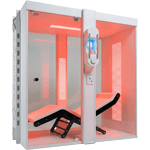 Salt & Red Light
 Vibroacoustics
 Magnetic Field Applications
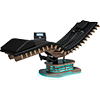 Back therapy system
 WeberBrain
 Pelvic floor training
 iFlow® IVT Therapy
 Frequency ultrasound
 Dermio Care Plus
 Lounge equipment
 Health of Point Diagnostics
 Body analysis
 FRAS 5
 Mobile HRV measurement


Short answer
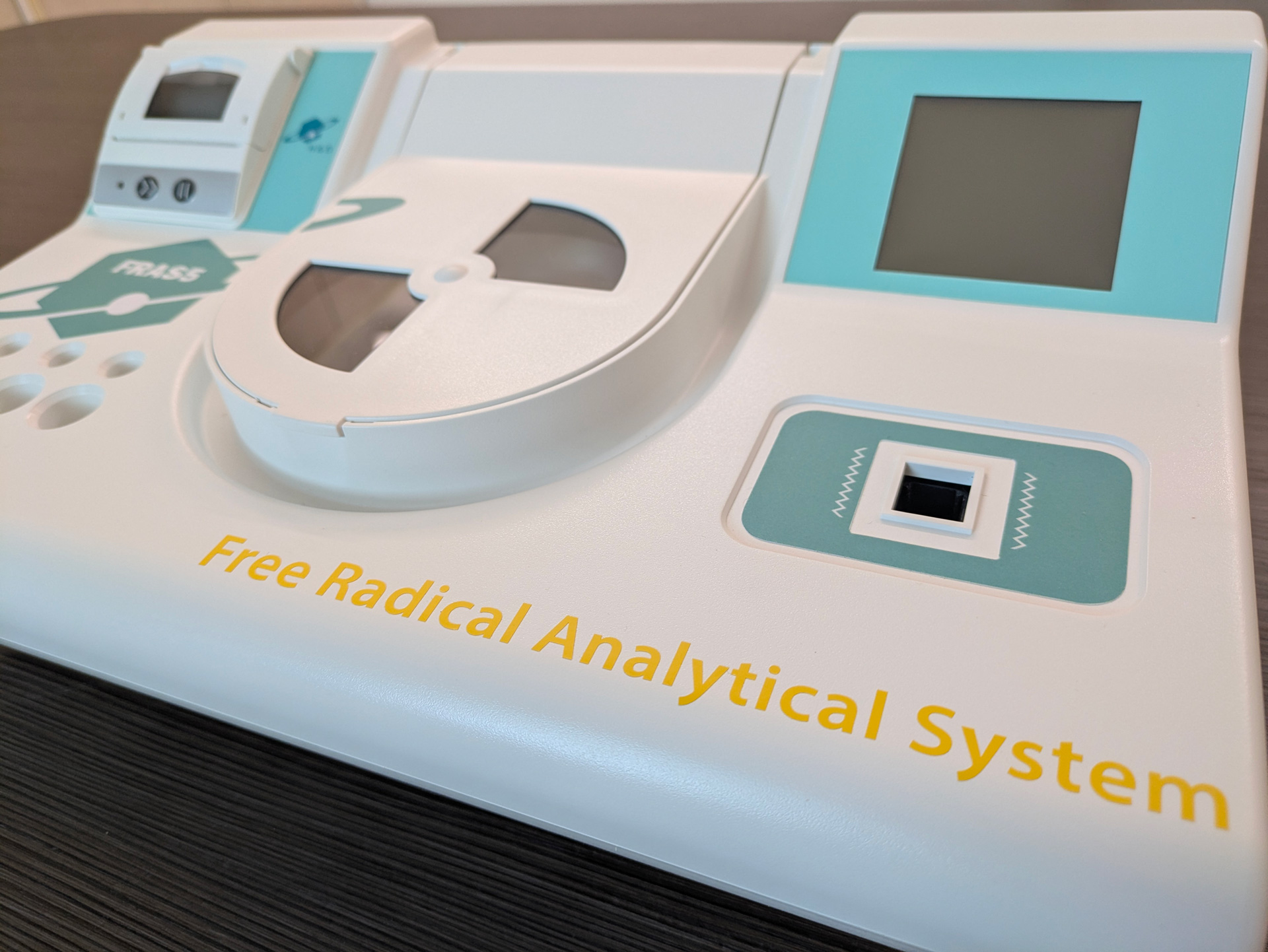
FRAS 5 is a compact redox analysis device that measures both sides of oxidative balance: oxidative stress with the d-ROMs test and antioxidant capacity with the PAT test. The measurement uses a small capillary blood sample from the fingertip, with an integrated centrifuge and guided operation, in a few minutes. For operators, a fixed procedure, qualified staff for sampling and professional interpretation are what count. Single values are not a diagnosis.
Position your facility as a longevity destination.
In a 30-minute session, we'll assess which longevity and biohacking technologies fit your space, your clientele, and your business model, and which don't.
Arrange a ConsultationAt a glance
Measures
oxidative stress (d-ROMs) and antioxidant capacity (PAT)
Sample
small capillary blood sample from the fingertip
Device
integrated centrifuge, guided operation
Measuring time
d-ROMs around 2.5 minutes, PAT about 1 minute
Limit
no diagnosis from single values
Strongest facility type
Longevity centre
What FRAS 5 measures: both sides of the redox balance
FRAS 5 makes redox status visible within minutes. Anyone bringing a redox analysis device into their facility needs above all a clear measurement procedure and an honest interpretation of the values.
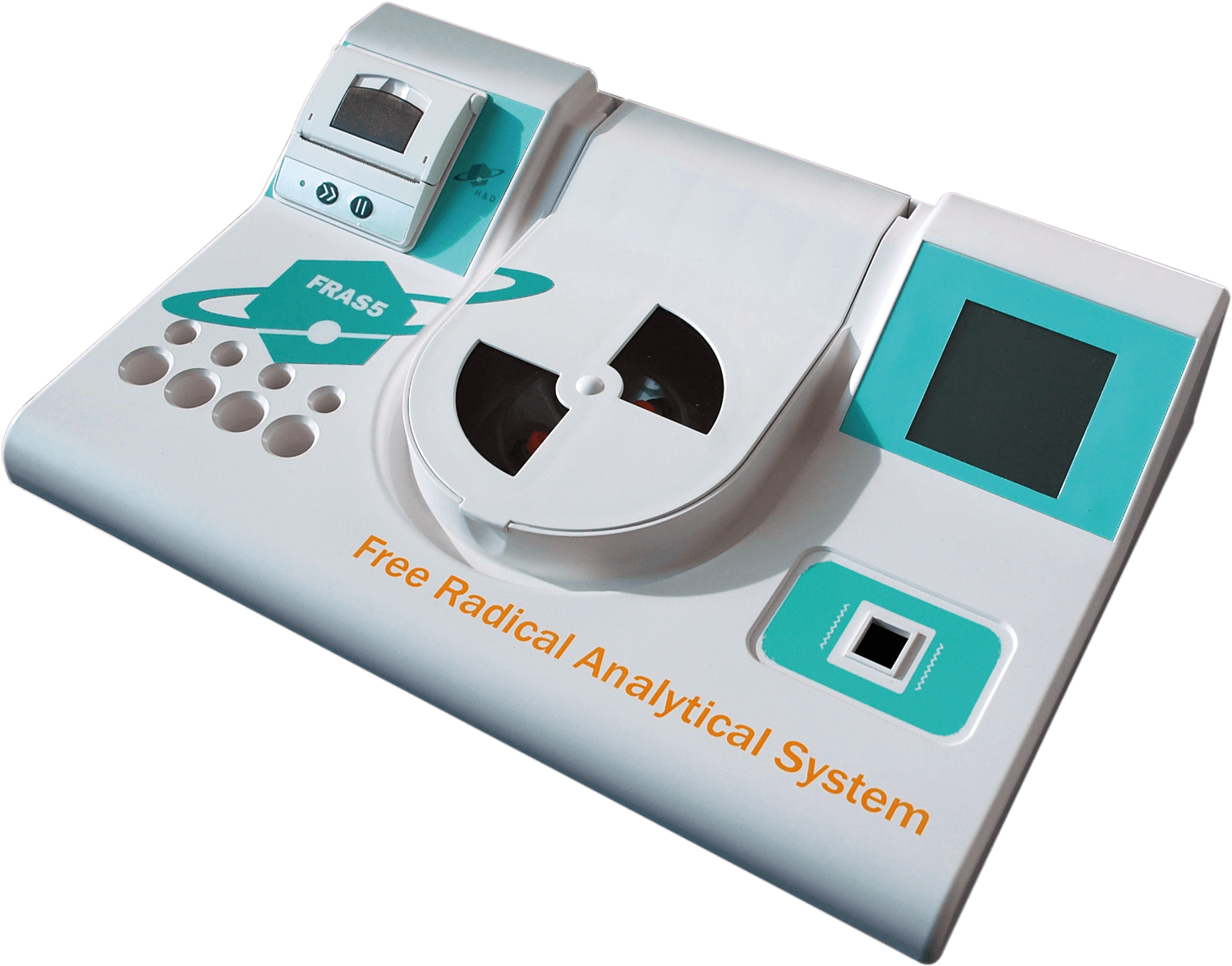
FRAS 5 is a compact analysis system for oxidative balance. It does not measure just one side but the relationship between oxidative stress and antioxidant capacity. Two tests are available for this.
| Test | What it captures | Unit and context |
|---|---|---|
| d-ROMs | reactive oxygen metabolites as markers of oxidative stress | reported in U.Carr |
| PAT | antioxidant capacity in plasma | view of antioxidant reserves |
| OSI index | ratio of both values | makes interpretation easier for professionals |
The measurement uses a small capillary blood sample from the fingertip. The device has an integrated centrifuge, evaluates photometrically and guides the user step by step via the display.
The measurement procedure step by step
An FRAS 5 measurement is quick, but it is a small laboratory process. A fixed procedure ensures comparable values and a professional impression.
- Preparation: appointment, instructions, materials ready
- Sample: small blood sample from the fingertip
- Analysis: centrifuge and photometric measurement
- Consultation: interpret values, plan follow-up
Pure measuring time is short: the d-ROMs test takes around two and a half minutes, the PAT test about one minute. For the appointment, preparation, sampling and consultation come on top. So plan a consultation slot, not just device time.
Important: capillary blood sampling belongs in qualified hands and within a legally permitted framework. Clarify beforehand who takes the sample in your facility and who interprets the values.
Consumables, hygiene and documentation
Besides the device, every measurement needs consumables and a clean workstation. These points should be settled before the first client appointment:
- Test materials: reagents and accessories for d-ROMs and PAT, stored as specified.
- Sampling: lancets, disinfection, gloves and safe disposal.
- Workstation: fixed table, socket, storage, good lighting.
- Documentation: values, date, time and conditions, stored in compliance with data protection.
- Cost per measurement: factor consumables into the price.
Limits of interpretation: what the values do not say
Redox values create a concrete reason for a conversation. But they are neither a diagnosis nor proof that a programme or application works. Single values depend on many factors, such as training, diet, sleep or acute stress.
- No diagnosis from single values: an elevated value is a hint, not a finding.
- Trend instead of snapshot: FRAS 5 becomes meaningful through repeated measurements under comparable conditions.
- Professional interpretation: medical statements belong with qualified professionals.
- No longevity proof: better values do not prove a longer or healthier life.
Combined with other measurements, a fuller picture emerges. How to organise comparable measurement procedures is shown in our article on HRV measurement.

Which facility FRAS 5 suits
- Longevity centre: as a measurement component at programme start and at fixed intervals, combined with consultation.
- Practice: as an addition to check-ups, with professional interpretation by qualified staff.
- Sport and performance: to accompany training and recovery phases, if staff are available for sampling and consultation.
Further measurement methods are part of our point-of-health diagnostics. All device details are on the FRAS 5 redox analysis page.
HF Concepts Check: how we rate FRAS 5 by facility type
In the HF Concepts Check, we score nine criteria from 1 to 5, always for a specific facility type. The same technology can score strongly in one facility type and only moderately in another. That is exactly the point.
Our assessment after reviewing the technology, based on typical facilities of each type. No guarantee for any individual case.
Longevity centre: 35/45; Practice: 34/45; Sport & performance: 28/45.
How to communicate FRAS 5 in line with HWG
| Safe to communicate | Avoid |
|---|---|
| Make redox status measurable | “diagnosis” or “finding” from single values |
| Quick measurement with a clear procedure | “proves the application works” |
| Trend over several appointments | “measures your biological age” |
| Concrete basis for consultation | “extends life” |
A suitability check before the first session belongs in every professional workflow. If there are health questions, the application should be cleared with a physician beforehand.
Ready to add a proven revenue stream?
From cryotherapy to hyperbaric oxygen, explore our full portfolio and request pricing for your facility.
Get a QuoteFrequently asked questions
What is FRAS 5?
A compact analysis system for oxidative balance. It measures oxidative stress with the d-ROMs test and antioxidant capacity with the PAT test.
How does a measurement work?
A small capillary blood sample from the fingertip is centrifuged and measured photometrically. The device guides the user step by step.
How long does the analysis take?
The d-ROMs test takes around two and a half minutes, the PAT test about one minute. Preparation, sampling and consultation add to the appointment.
Who may take the blood sample?
Sampling belongs in qualified hands and within a legally permitted framework. Clarify this for your facility before starting.
Can FRAS 5 be used to make a diagnosis?
No. Single values are hints, not findings. The measurement becomes meaningful over time and with professional interpretation.
What is the OSI index?
An index that relates the d-ROMs and PAT values and makes interpretation easier for professionals.
Transparency: HF Concepts sells some of the technologies discussed here. That’s why we assess against clear criteria and advise against a purchase when the fit is missing.
Note: All information is general, non-medical information. The applications discussed are wellness and recovery applications and do not replace medical advice.