
Published on 18. November 2026
Transcranial Photobiomodulation Operator Check: Laser, Not Panel
Oskar Filenius
Short answer
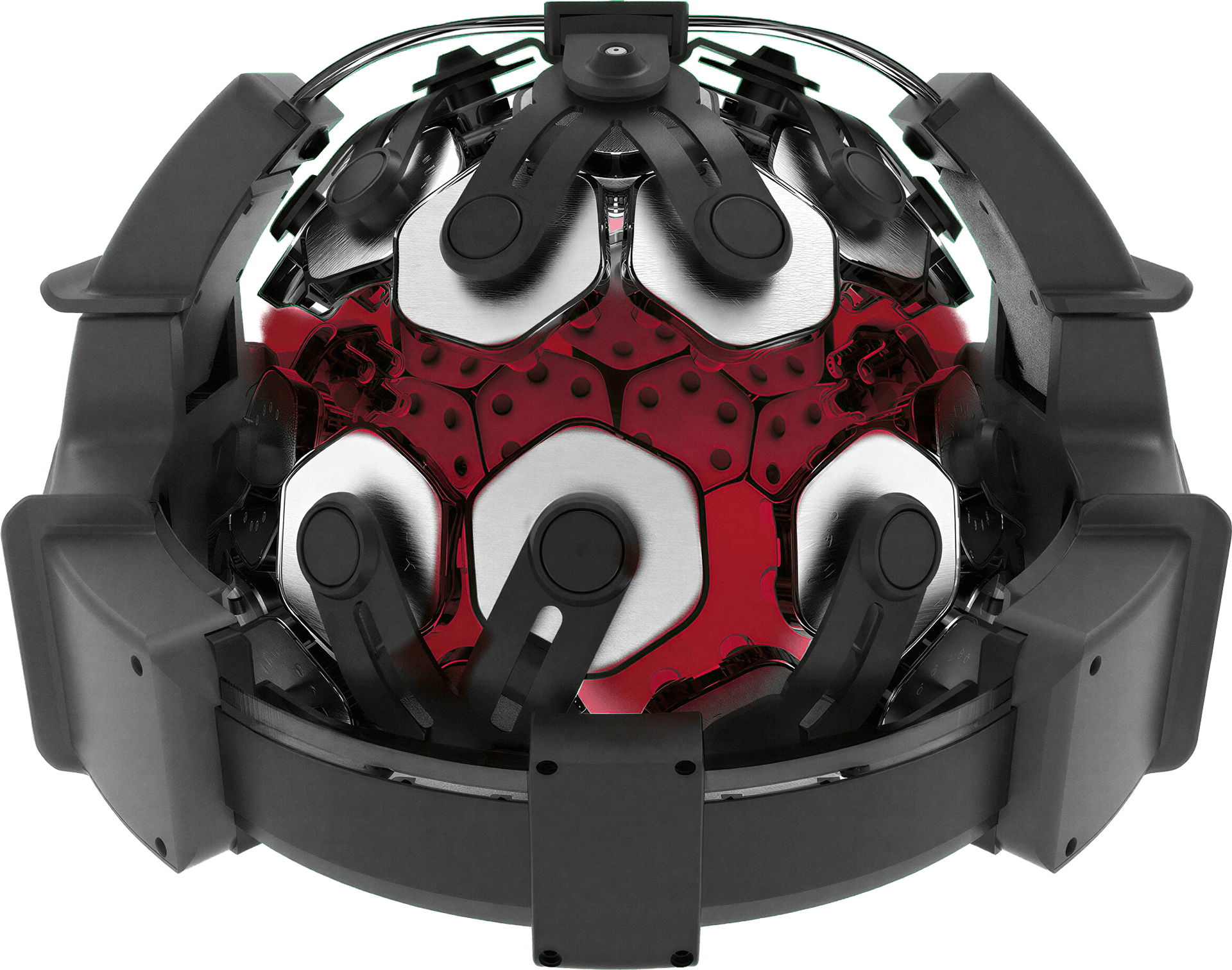
Transcranial photobiomodulation uses laser diodes rather than LEDs: a helmet places the applicators directly on the scalp, and the WeberBrain works with 650, 808 and 1064 nanometres. For operators this is not a light system like a red light panel but a CE-certified medical device with laser safety obligations. It belongs in practices and medically led longevity centers, not in a gym or a spa.
At a glance
Technology
laser diodes only, no LEDs
Wavelengths
650 nm, 808 nm, 1064 nm
Application
helmet with applicator arms, directly on the scalp
Status
CE-certified medical device
Operator duties
laser safety, briefing, documentation
Experience
non-invasive and painless, according to the manufacturer
Procedure
series over several weeks per the manufacturer's protocol
Financing
leasing over 24–60 months available
What is transcranial photobiomodulation?
Photobiomodulation means light of a defined wavelength reaches tissue and is absorbed there by the mitochondria. Transcranial means the light is applied through the scalp. The WeberBrain uses a helmet whose applicator arms bring the light directly onto the scalp, so that as little light as possible is lost in the hair.
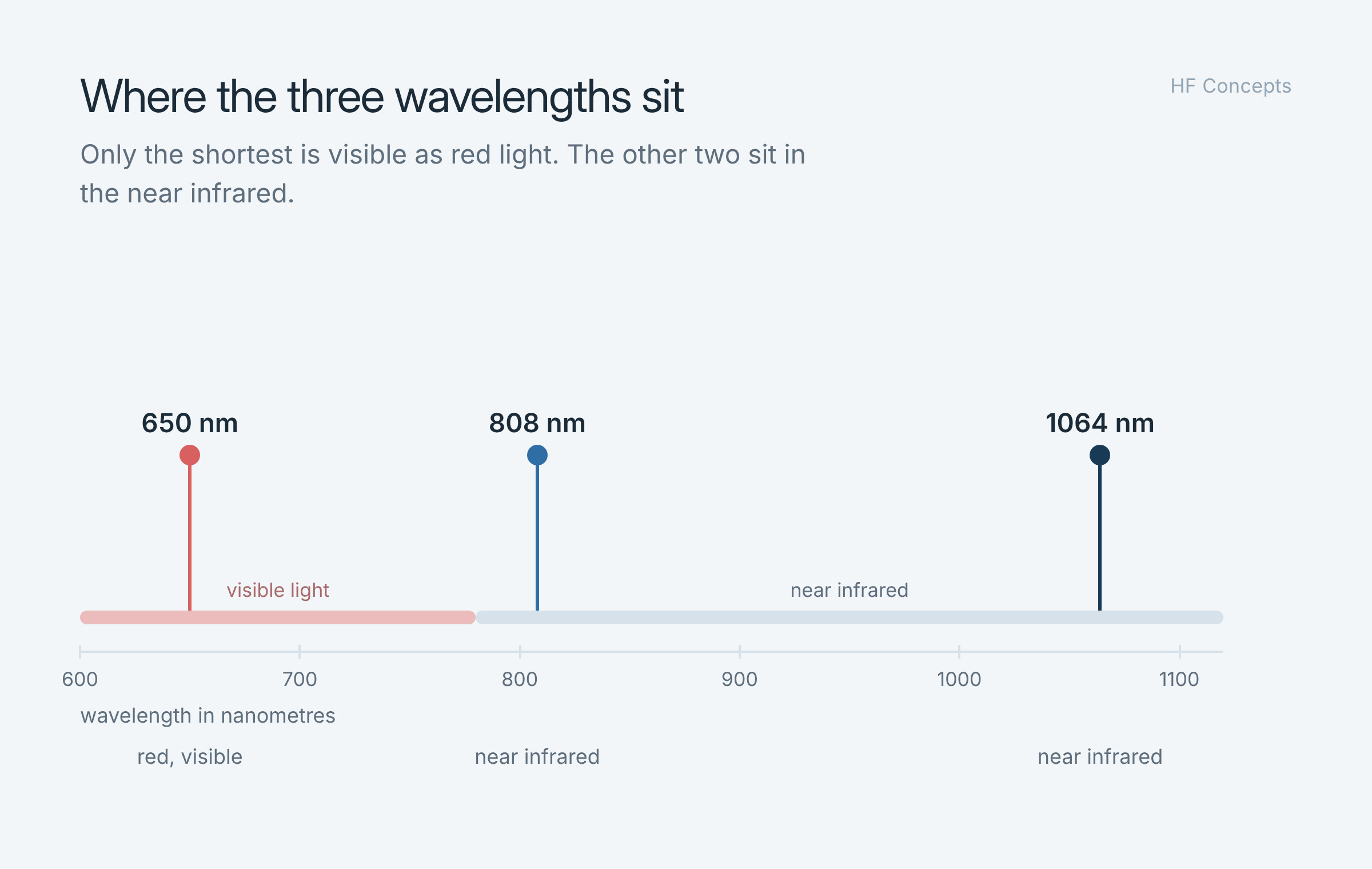
Three wavelengths are used at the same time: 650, 808 and 1064 nanometres. The decisive technical difference from the light systems familiar from the wellness world is the light source. These are laser diodes, not LEDs. That is not a marketing detail; it is the reason for almost everything that follows in this article.
Why is this not a red light panel?
In sales conversations, red light panels, light cabins and laser systems regularly end up in the same category because all three work with red and infrared light. Operationally they have almost nothing in common. The table below shows how to tell the three categories apart.
| Characteristic | LED panel | Light cabin | Laser (transcranial) |
|---|---|---|---|
| Light source | LED | LED | laser diodes |
| Area treated | large area | large area | localised, at the head |
| Regulation | usually not a medical device | usually not a medical device | CE-certified medical device |
| Protective measures | eye protection advised | eye protection advised | laser safety mandatory |
| Facility type | studio, spa, practice | studio, spa, hotel | practice, clinic |
| Supervision | low | low | professionally led |
The consequence for your offer: a laser system does not replace a panel and a panel does not replace a laser system. If you already offer light applications, the LED side is covered in our articles on professional versus consumer panels and on photobiomodulation with Lumivera.
Which operator duties does a laser trigger?
This is where most projects stall, and usually only after the purchase. A medical laser system brings obligations a red light panel does not have. They are manageable, but not as an afterthought.
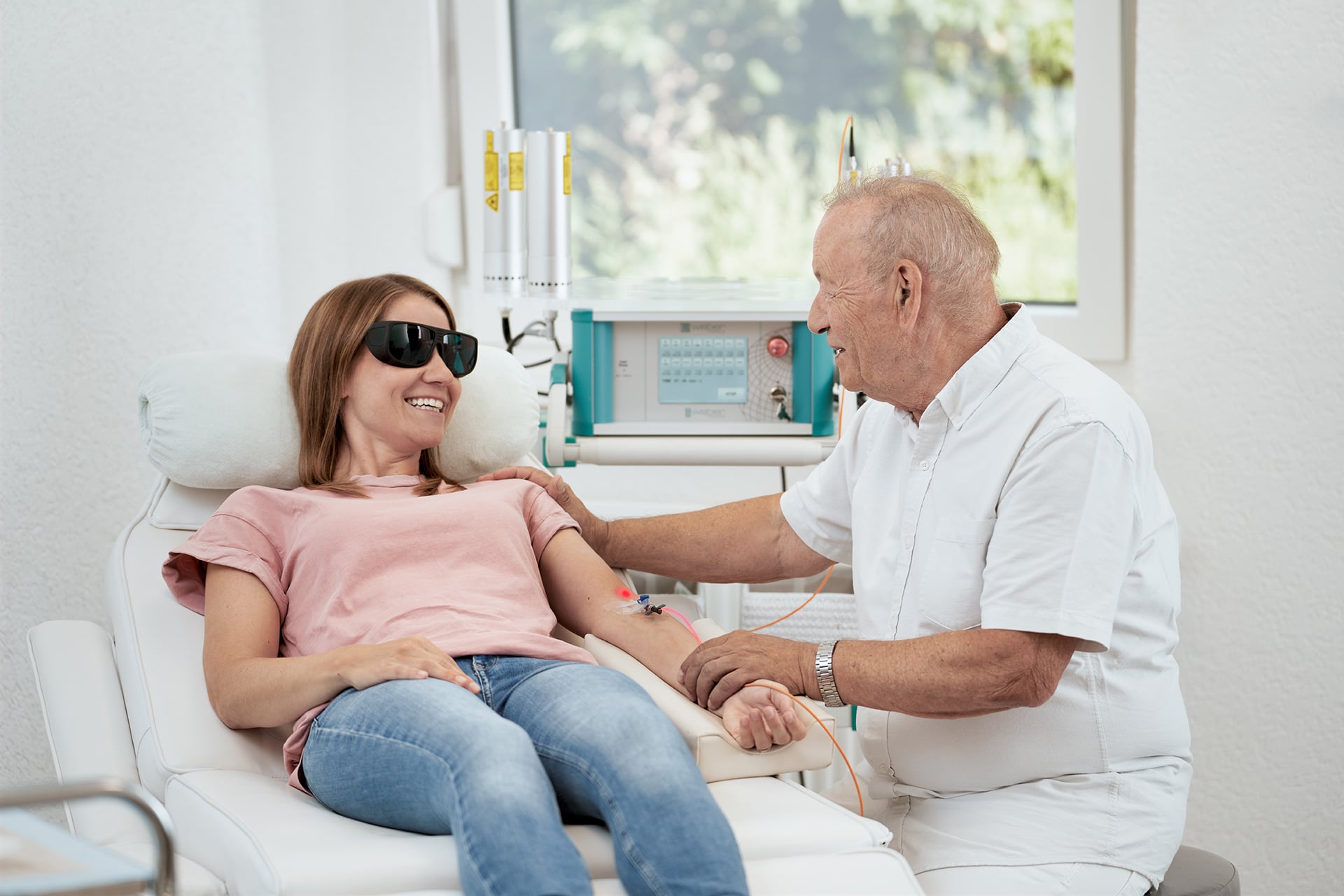
- Organise laser safety: operating a medical laser requires a qualified person to be appointed. That training is an appointment in its own right, not a line inside the device briefing.
- Obtain protective eyewear: matched to the wavelengths in use, for operators and clients, and in sufficient numbers.
- Define the room: the application area is delimited and marked. A thoroughfare is therefore out.
- Document the briefing: as a medical device it carries the usual operator duties, from the briefing to the device log.
- Put the workflow in writing: who starts, who stops, who documents. That belongs before the first client appointment.
This is an overview from operator projects, not legal advice. The manufacturer's instructions for use and the occupational safety rules applying at your location govern.
Who may carry out the application?
This is where it is decided whether the device suits you at all. The manufacturer's documentation lists application areas that clearly belong in a medical setting, including neurological conditions. A studio or spa can neither carry out nor advertise such applications.
In practice that means the system belongs in a practice or in a longevity center under medical or licensed practitioner leadership. Screening for exclusion criteria before the first application is not optional here but part of the workflow.
Which facility does the system pay off for?
| Facility type | Role in the offer | Sensible pricing logic |
|---|---|---|
| Private practice | self-pay service under professional leadership | series over several weeks, €60–120 per session |
| Longevity center with a physician | element of a programme alongside diagnostics | within the programme price |
| Clinic, rehab | part of a treatment concept | within its own billing framework |
| Gym | not suitable | – |
| Hotel, spa | not suitable | – |
| Private | only with professional guidance | purchase |
Because the application runs in series, it carries itself through programmes rather than single appointments.
How do you talk about it without overpromising?
The manufacturer's documentation names indications and mechanisms. Neither should go unchecked into your advertising: for medical devices the manufacturer's intended purpose applies, and statements about medical conditions are tied to narrow conditions.
What holds up is a description of the procedure: helmet, three wavelengths, application on the scalp, duration per protocol, protective eyewear, a series over several weeks. Going beyond that requires the professional qualification that permits it.
HF Concepts Check: how we rate transcranial photobiomodulation by facility type
- Client benefit
- Plausibility & regulation
- Target group fit
- Investment
- Marketability
- Integration
- Time & staff
- Earnings
- Differentiation
- Client benefit
- Plausibility & regulation
- Target group fit
- Investment
- Marketability
- Integration
- Time & staff
- Earnings
- Differentiation
- Client benefit
- Plausibility & regulation
- Target group fit
- Investment
- Marketability
- Integration
- Time & staff
- Earnings
- Differentiation
- Client benefit
- Plausibility & regulation
- Target group fit
- Investment
- Marketability
- Integration
- Time & staff
- Earnings
- Differentiation
Our assessment after reviewing the technology, based on typical facilities of each type. No guarantee for any individual case.
The assessment splits unusually widely. In a private practice, Target group fit and Differentiation reach the top: hardly anyone nearby has such a system. For gyms and hotels we award the lowest Target group fit score we give at all, because the professional prerequisite is missing there, however interesting the technology may be.
Integration and Time & staff sit mid-range everywhere. The device itself needs little space, but the obligations around it take time, and the application runs under professional supervision rather than alongside everything else.
Common mistakes we see in projects
- Bought as a light application: anyone expecting a panel gets a medical device with laser safety duties.
- Laser safety organised too late: the training belongs before delivery, not after the first application.
- Planned in the wrong facility type: without professional leadership the application can neither be carried out nor advertised.
- Manufacturer copy adopted: indication lists do not belong unchecked in your own advertising.
- Sold as single appointments: the application is designed as a series and only pays off that way.
Conclusion
Transcranial photobiomodulation is the most demanding application in the portfolio in professional terms, and at the same time the one with the clearest target group. For a practice or a medically led longevity center it is a genuine differentiator that cannot simply be bought next door. For a gym, spa or hotel it is not, not because of the technology but because of responsibility. Whoever acquires it plans laser safety, room and workflow before delivery.
Manufacturer specifications are on the product pages for the Weber Medical WeberBrain and the Weber Medical Endolaser.
Frequently asked questions
What is transcranial photobiomodulation?
An application in which laser light of defined wavelengths is delivered through the scalp. In the WeberBrain this is done by a helmet with applicator arms that bring the light directly onto the scalp.
How does it differ from a red light panel?
In the light source and in regulation. These are laser diodes rather than LEDs, the application is localised at the head rather than across a large area, and it is a CE-certified medical device with laser safety obligations.
Which wavelengths are used?
650, 808 and 1064 nanometres, simultaneously. Only the shortest of them is visible as red light; the other two sit in the near infrared and cannot be perceived by the eye.
What obligations fall on the operator?
Laser safety with a named qualified person and matching protective eyewear, a delimited and marked application area, and the usual medical device duties from the documented briefing to the device log.
Which facility is the system suited to?
Practices, clinics and longevity centers under medical or licensed practitioner leadership. It is not suited to gyms, spas or hotels, because the professional prerequisite for carrying out and advertising the application is missing there.
May I name the manufacturer's application areas in my advertising?
Only within the intended purpose and only as far as your qualification allows. Indication lists from manufacturer documentation should not be taken unchecked into your own communication.
Transparency: HF Concepts sells some of the technologies discussed here. That's why we assess against clear criteria and advise against a purchase when the fit is missing.
Note: All information is general, non-medical information. The applications discussed are wellness and recovery applications and do not replace medical advice.