
 Electric cryo chamber
 Thermal contrast
 Ice bath 2.0
 Dry Floating
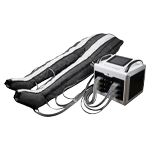 Lymphatic drainage
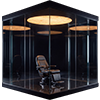 Multisensory Regeneration Cabin
 IHHT altitude training
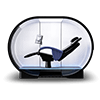 HBOT Oxygen chamber
 Water Plasma Application
 Red Light Therapy
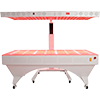 Photobiomodulation
 Cell regeneration
 Endolaser
 HaloCab Human Supercharger
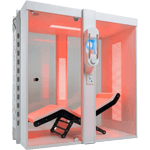 Salt & Red Light
 Vibroacoustics
 Magnetic Field Applications
 Back therapy system
 WeberBrain
 Pelvic floor training
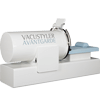 iFlow® IVT Therapy
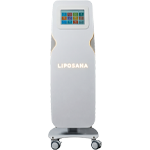 Frequency ultrasound
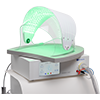 Dermio Care Plus
 Lounge equipment
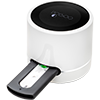 Health of Point Diagnostics
 Body analysis
 FRAS 5
 Mobile HRV measurement

Short answer
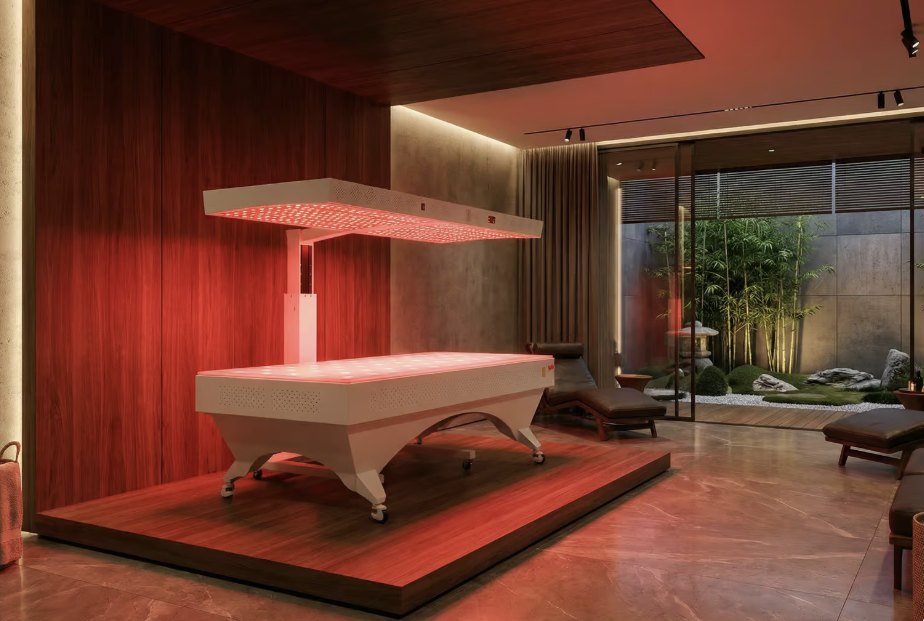
Photobiomodulation (PBM) is the application of red and near-infrared light that interacts with cellular structures such as cytochrome c oxidase in mitochondria and works non-thermally. The Lumivera system turns this into a modular architecture: nine wavelengths from 480 to 1060 nm, dual-chip LEDs and more than 1,400 W/m² irradiance. Panels can be used locally or combined into a full-body setup. For operators, that means starting small and expanding as demand grows.
At a glance
Wavelengths
9, from 480 to 1060 nm
LED technology
dual-chip
Irradiance
over 1,400 W/m² (manufacturer data)
Configurations
local, half-body, full-body
Operational strength
modular and expandable
Strongest facility type
practice and longevity center
What is photobiomodulation?
Photobiomodulation works with light in the red and near-infrared spectrum. It centers on the interaction with mitochondrial structures, particularly cytochrome c oxidase. The key distinction from a heat lamp: PBM is a non-invasive, non-thermal method. Shorter wavelengths are associated with surface applications, longer near-infrared wavelengths with deeper tissue layers.
For your marketing: research on photobiomodulation is extensive, but individual study results cannot be transferred to every device and application. Communicate technology, process and experience, not medical effects.
What sets Lumivera apart technically
| Feature | Lumivera (manufacturer data) | Why it matters in business |
|---|---|---|
| Wavelengths | 9, from 480 to 1060 nm | surface and deeper applications in one system |
| LED technology | dual-chip | even coverage of multiple wavelengths |
| Irradiance | over 1,400 W/m² | structured, reproducible protocols |
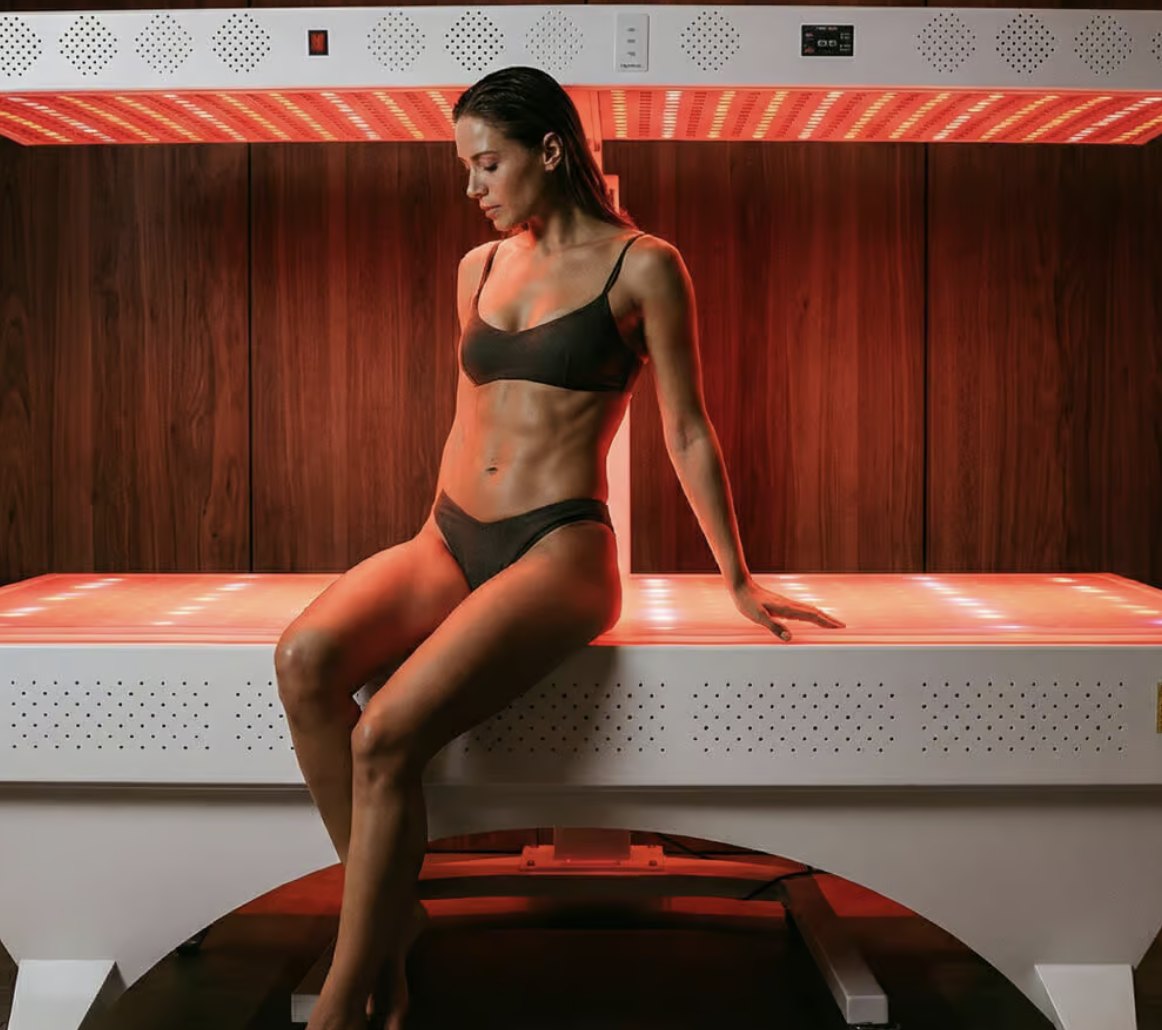
| Architecture | panels individually or combined | expandable from entry level to full body |
| Use | local, half-body, full-body | adapts to room, target group and offer |
Why modular is the better entry point for many facilities
The biggest uncertainty with new technologies is demand. A modular system reduces that risk: start with one or two panels for local applications, see how clients respond, and later expand to half-body or full-body configurations. The investment grows with the business, not the other way round.
| Stage | Configuration | Typical use |
|---|---|---|
| Entry | single panel | local application, complement to treatment |
| Expansion | several panels combined | half-body application on the bed |
| Full setup | large-area configuration | full-body application, own booking category |
Lumivera, full-body bed or consumer panel?
Compared with a fixed full-body bed like the RedWave, Lumivera is more flexible but more complex to plan in its full configuration. Compared with consumer panels, the difference lies in wavelength range, irradiance and professional system logic. When each system fits is covered in Red Light: Professional vs. Consumer Panels and the light and salt systems comparison.
What PBM needs in daily operation
- Space: from a wall panel next to the treatment bed to a dedicated room for the full-body solution.
- Staff: onboarding on protocols and positioning; locally combinable with ongoing treatments.
- Safety: protective eyewear and a suitability check for light-sensitive people.
- Protocols: fixed programs for repeatable, comparable sessions.
How photobiomodulation pays off
In practices, PBM is often offered as a complement to existing treatments, for example locally during or after a physiotherapy session. In longevity centers, it fits into multi-session programs; in beauty, as a series. Because the system is expandable, the next step can be tied to real booking numbers. More on our products page.
HF Concepts Check: how we rate photobiomodulation with Lumivera by facility type
In the HF Concepts Check, we score nine criteria from 1 to 5: client benefit, plausibility & regulation, target fit, investment, marketability, integration, time & staff, earnings and differentiation. The score always applies to a specific facility type. Select the facility that matches yours in the scorecard.
Our assessment after reviewing the technology, based on typical facilities of each type. No guarantee for any individual case.
Longevity center (37): program-ready, modular and easy to combine with diagnostics.
Private practice / physio (36): can be combined locally with ongoing treatments and expanded later.
Wellness & beauty (35): flexible on the treatment bed for series; communication about skin appearance needs care.
Gym (31): possible, but for high throughput a full-body bed is usually the better choice.
Common mistakes we see in projects
- Buying the full setup right away: without proven demand, the large configuration ties up capital unnecessarily.
- Studies as advertising promises: individual research findings don’t belong in communication as guaranteed effects.
- No fixed protocols: without reproducible workflows, sessions can’t be compared.
- Confusing PBM with a heat lamp: if you don’t explain the method, you undersell it.
Conclusion
Photobiomodulation is one of the most versatile light applications in the portfolio, and Lumivera makes it modular. Nine wavelengths, high irradiance and an expandable architecture suit practices and longevity centers that want to start small and grow with demand. Fixed protocols and communication that explains technology and process instead of promising healing are what matter.
Frequently asked questions
What is photobiomodulation?
The application of red and near-infrared light that interacts with cellular structures such as cytochrome c oxidase in mitochondria. The method is non-invasive and non-thermal.
What is the difference between photobiomodulation and red light?
Red light is part of photobiomodulation. Professional PBM systems like Lumivera also use additional wavelengths, nine from 480 to 1060 nm in Lumivera’s case.
Which wavelengths does Lumivera use?
According to the manufacturer, nine wavelengths from 480 to 1060 nm, delivered with dual-chip LEDs.
Can the system be expanded later?
Yes. Lumivera is modular; individual panels can be combined into half-body or full-body configurations.
Is photobiomodulation suitable for everyone?
People with light sensitivity, certain skin conditions or health concerns should consult a physician beforehand.
Transparency: HF Concepts sells some of the technologies discussed here. That’s why we assess against clear criteria and advise against a purchase when the fit is missing.
Note: All information is general, non-medical information. The applications discussed are wellness and recovery applications and do not replace medical advice.