
Published on 2. November 2026
Multisensory regeneration cabin operator check: which facility the experience room pays off for

Oskar Filenius
Short answer
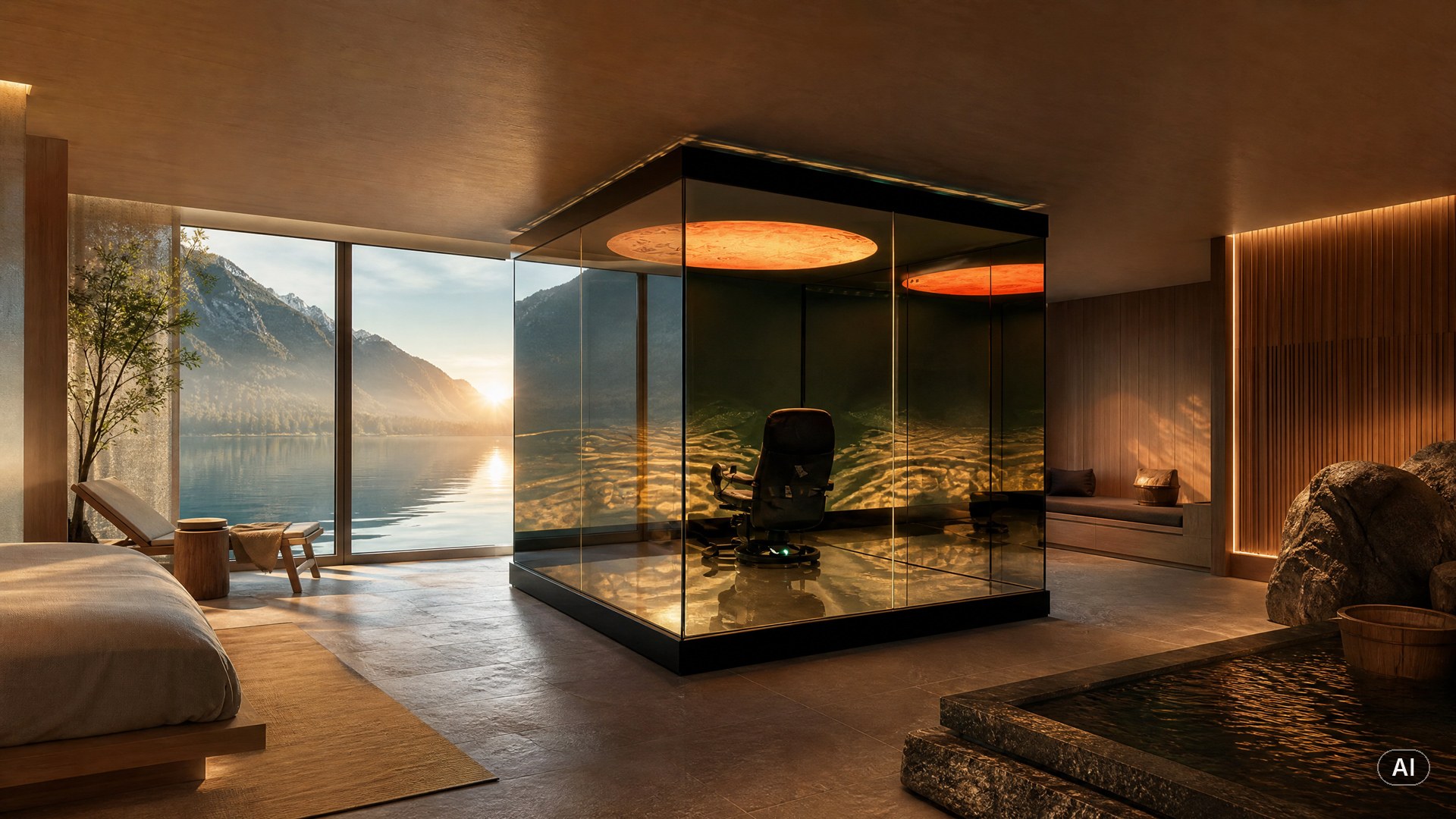
The multisensory regeneration cabin is a shielded experience room that combines coloured light, sound, visual worlds and ECG-based HRV measurement into structured sessions. The standard configuration is about 2.60 metres wide and 2.55 metres high; dimensions and equipment are planned per project. For operators it is above all a premium offer with strong differentiation: it pays off where guests look for retreat and the cabin is visibly built into packages, memberships or corporate health concepts.
At a glance
Principle
shielded room with coloured light, sound, visuals and HRV feedback
Technology
curved LED display, twelve colour light channels, stereo and bone conduction audio
Size
standard about 2.60 m wide and 2.55 m high, plannable per project
Programmes
blueprints for relaxation and sleep, regeneration, clarity, activation
Staff
reception and start, no continuous supervision during the session
Strongest facility type
Hotel & spa
What is the multisensory regeneration cabin and what is it not?
The multisensory regeneration cabin is not a single application but a room of its own. Planning it means deciding on space, booking logic and positioning at the same time.
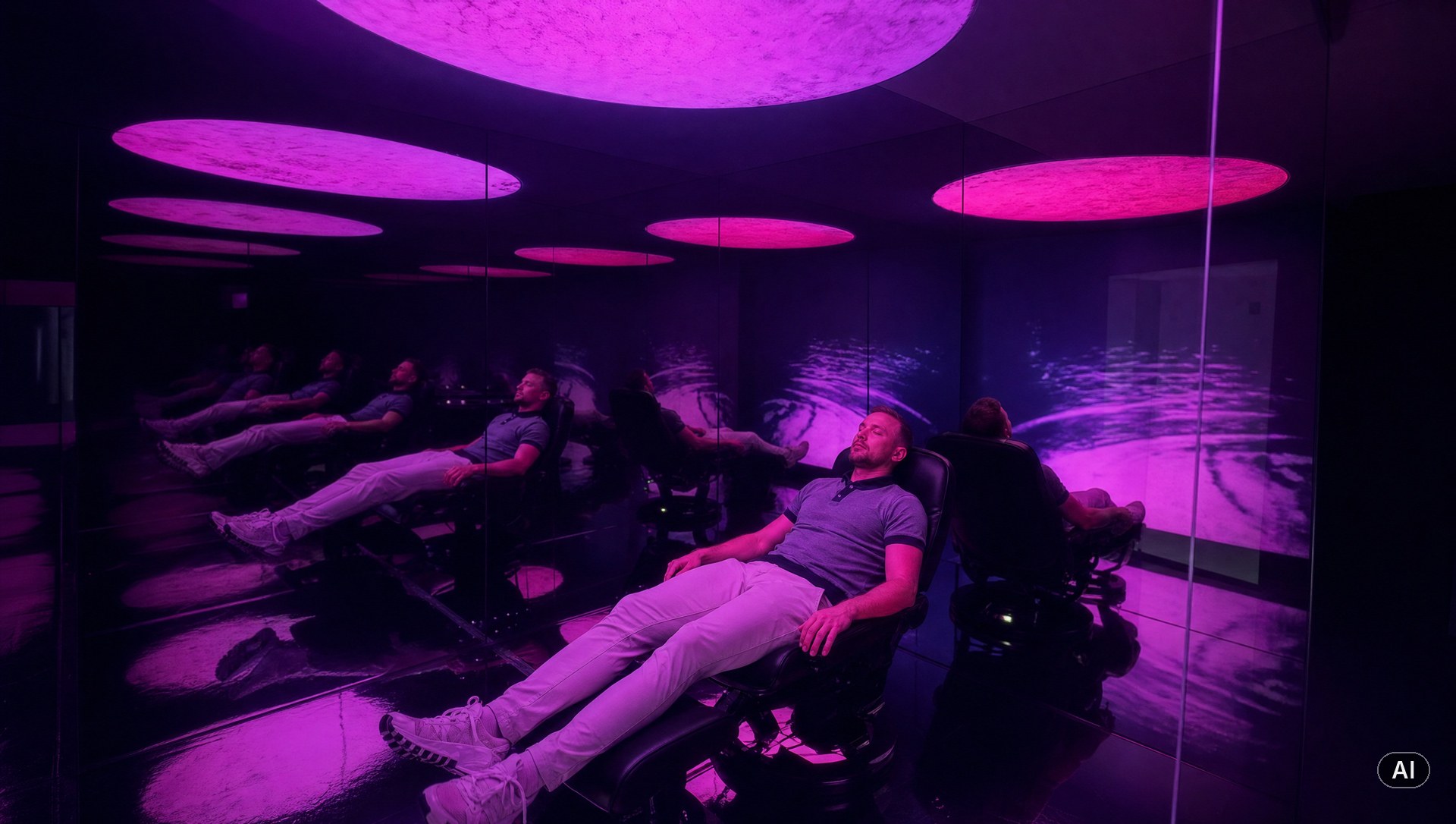
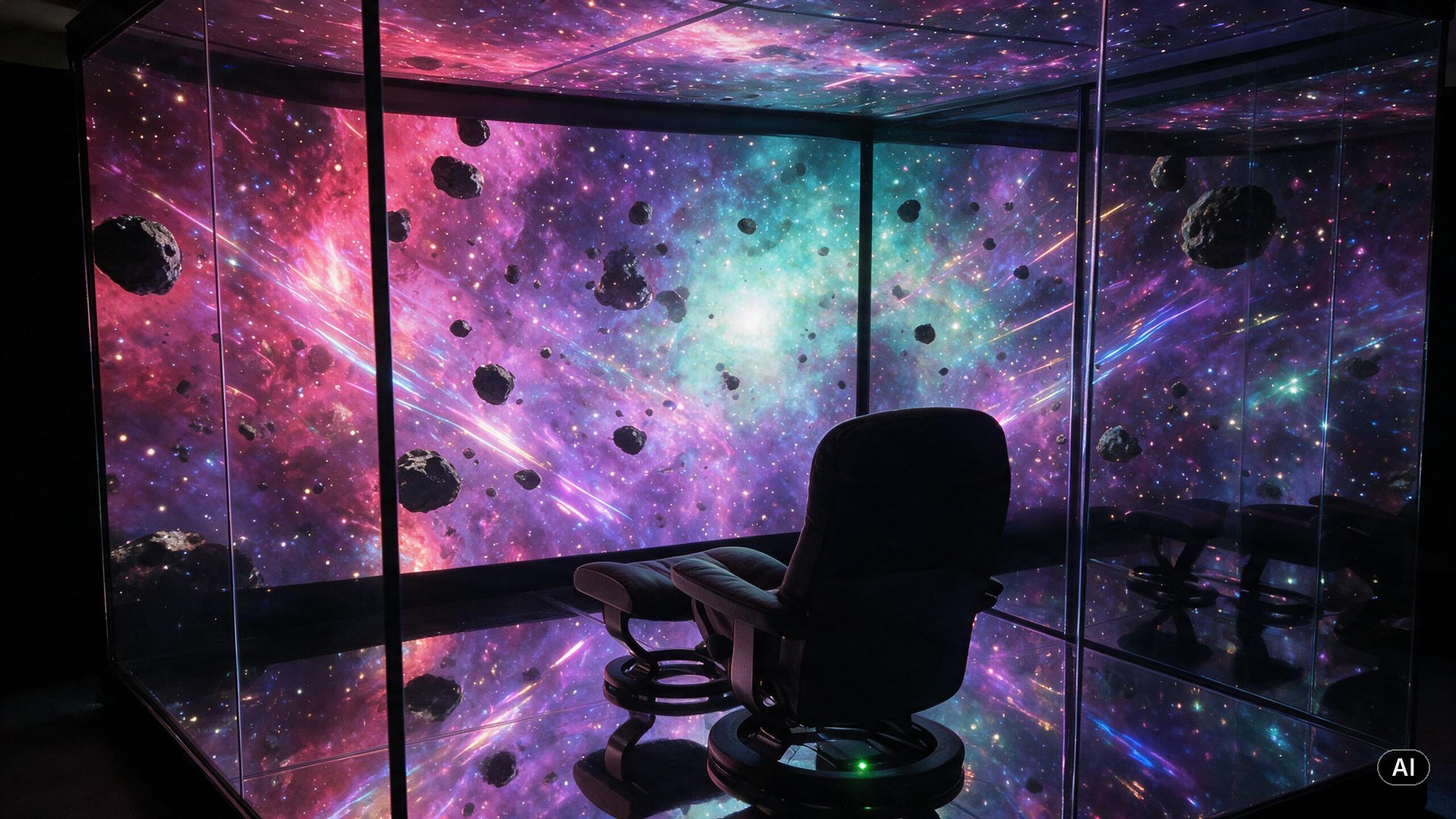
The cabin combines a protected retreat with coordinated visual, auditory and sensory impulses. Sound insulation and electromagnetic shielding reduce outside influences, while structured sequences of image, colour and sound run inside.
- Image: a curved LED surface shows visual worlds matching the programme.
- Coloured light: ColorBox12 technology controls twelve channels of colour and frequency.
- Sound: stereo and bone conduction, complemented by binaural frequencies.
- Measurement: the IQsense 2 sensor records heart rate variability based on an ECG signal.
What the cabin is not: a medical device or a therapy room. It is a wellness and experience application for relaxation, regeneration and focus, and that is how it should be sold.
How does a session work?
The procedure is simple for the guest and easy to plan for the team. Before the start, your team selects a blueprint, a programme with a defined focus.
- Reception: check suitability, clarify the goal of the session, select a blueprint
- Start: fit the sensor, the guest takes a seat in the cabin, start the programme
- Session: image, coloured light and sound run while HRV is recorded
- Close: short conversation, look at the evaluation, prepare the cabin
The duration depends on the selected programme. Plan additional time for reception, sensor and changeover so the cabin does not run under time pressure.
What the cabin means for space, staff and workflow
The cabin is custom-built and adapted to the room, display size and design. That makes it part of the architecture but requires early planning.
| Topic | What matters |
|---|---|
| Space | standard about 2.60 m wide and 2.55 m high, plus access and waiting area |
| Room | quiet location without through traffic, power and network as per project planning |
| Staff | reception, sensor, start and cleaning, no supervision during the session |
| Cleaning | contact surfaces and sensor after every guest, as specified in the instructions |
Especially in existing spaces, it pays to check dimensions with us early. The actual requirements are defined in project planning.
Use in companies: retreat, booking and privacy
In corporate health, the cabin is an enclosed retreat within the working day. For it to be used, three things need to be settled:
- Booking: fixed time slots via an internal booking system, so nobody waits at the door.
- Privacy: measurement data belongs to the user. Clarify in advance who can access evaluations.
- Responsibility: a named person for briefing, cleaning and faults.
How recovery at the workplace is planned overall is covered in Corporate health with longevity: recovery at the workplace.

How the cabin pays off
The cabin is an investment in experience quality. It rarely pays off through single sessions, but through its role in the offer:
- Signature application: a showpiece in the spa that triggers bookings and upgrades.
- Package component: in retreats, recovery or sleep programmes.
- Membership: with fixed quotas and progress evaluation via HRV data.
- Corporate health: as a benefit for employees with plannable utilisation.
How to set utilisation and break-even realistically is shown in The utilization trap: how to calculate break-even realistically. All details on the cabin are on our multisensory regeneration cabin page.
How to communicate the regeneration cabin in line with HWG
| Safe to communicate | Avoid |
|---|---|
| Shielded retreat with light, sound and visuals | “measurably reduces stress” |
| Programmes for relaxation, regeneration and focus | “cures sleep disorders” |
| HRV feedback as orientation over time | “HRV diagnosis” or “health check” |
| Individually integrated into the room | “guaranteed performance boost” |
A suitability check before the first session belongs in every professional workflow. If there are health questions, the application should be cleared with a physician beforehand.
HF Concepts Check: how we rate the regeneration cabin by facility type
In the HF Concepts Check, we score nine criteria from 1 to 5, always for a specific facility type. The same technology can score strongly in one facility type and only moderately in another. That is exactly the point.
Our assessment after reviewing the technology, based on typical facilities of each type. No guarantee for any individual case.
Longevity centre: 33/45; Hotel & spa: 35/45; Corporate health: 31/45
Common mistakes we see in projects
- Cabin placed in a walkway: an experience room needs a quiet location, otherwise it loses its effect.
- HRV data sold as a diagnosis: the measurement accompanies the session, it does not replace a medical examination.
- Dimensions checked too late: room height and access belong at the start of planning.
- No place in the offer: without a package, membership or signature role, the cabin remains an expensive one-off.
Conclusion
The multisensory regeneration cabin is a strong differentiator for hotels, spas, longevity centres and corporate health concepts. It combines retreat, experience and measurement in one room and needs little staff during the session. Its value comes from integration: visibly placed, clearly explained and a fixed part of packages or memberships. Plan space and dimensions early, and the cabin becomes part of the architecture.
Frequently asked questions
What is a multisensory regeneration cabin?
A protected room for sessions focused on relaxation, regeneration, focus and activation, in which light, sound, image and measurement work together.
How much space does the cabin need?
The standard configuration is about 2.60 metres wide and 2.55 metres high. Many dimensions can be adapted to the space; this is defined in project planning.
Which programmes are available?
Blueprints for relaxation and sleep, regeneration, mental clarity, activation and performance. Further programmes are possible depending on the configuration.
What is the HRV measurement used for?
Moni Health Intelligence processes the HRV data and takes it into account when selecting and adapting programmes. It is not a diagnosis.
Which facility does the cabin suit best?
Hotels and spas first, followed by longevity centres and corporate health concepts that offer retreat as a premium service.
Transparency: HF Concepts sells some of the technologies discussed here. That's why we assess against clear criteria and advise against a purchase when the fit is missing.
Note: All information is general, non-medical information. The applications discussed are wellness and recovery applications and do not replace medical advice.