
 Electric cryo chamber
 Thermal contrast
 Ice bath 2.0
 Dry Floating
 Lymphatic drainage
 Multisensory Regeneration Cabin
 IHHT altitude training
 HBOT Oxygen chamber
 Water Plasma Application
 Red Light Therapy
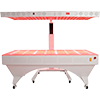 Photobiomodulation
 Cell regeneration
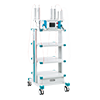 Endolaser
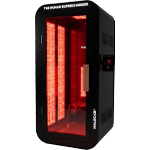 HaloCab Human Supercharger
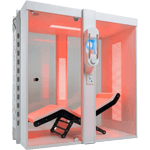 Salt & Red Light
 Vibroacoustics
 Magnetic Field Applications
 Back therapy system
 WeberBrain
 Pelvic floor training
 iFlow® IVT Therapy
 Frequency ultrasound
 Dermio Care Plus
 Lounge equipment
 Health of Point Diagnostics
 Body analysis
 FRAS 5
 Mobile HRV measurement
IHHT vs HBOT
IHHT and HBOT are often grouped together because both involve oxygen-based sessions, but they are not the same modality. The real difference is not just the equipment – it is the physiological principle, the session experience, and the type of use case each system is best suited for. If you are comparing the two for a clinic, wellness concept, recovery space, or performance facility, the most useful question is not which one is “better,” but which one fits your goals. For clinics assessing IHHT systems specifically, the IHHT machine buying guide outlines specs, safety, and workflow considerations.
At a high level, IHHT is usually positioned as an adaptive training stimulus, while HBOT is positioned as a high-oxygen pressure-based therapy environment. That distinction shapes everything from user experience to integration, positioning, and practical business fit.
What is the difference between IHHT and HBOT?
The main difference between IHHT and HBOT is how oxygen is delivered and what response the body is being encouraged to make.
- IHHT stands for Intermittent Hypoxia-Hyperoxia Training. The user typically breathes through a mask while oxygen levels alternate between lower-oxygen and higher-oxygen phases at normal atmospheric pressure.
- HBOT stands for Hyperbaric Oxygen Therapy. The user is placed in a pressurized chamber and breathes oxygen in an environment with increased atmospheric pressure.
In simple terms, HBOT focuses on increasing oxygen availability under pressure. IHHT focuses on creating a controlled alternation between lower and higher oxygen exposure to trigger adaptation. Because of that, they may overlap in some wellness and recovery conversations, but they are not interchangeable.
How IHHT and HBOT work
How IHHT works
IHHT uses alternating hypoxic and hyperoxic phases through a breathing system, usually while the user remains seated and relaxed. The idea is not just to provide oxygen, but to expose the body to a changing oxygen environment that may encourage adaptive responses. In performance and longevity discussions, IHHT is often associated with mitochondrial conditioning, oxygen utilization, and low-load recovery-oriented use.
Practically, this means an IHHT session is typically mask-based, non-pressurized, and designed around intervals rather than a single stable oxygen environment.
How HBOT works
HBOT places the user inside a pressurized chamber where oxygen is delivered in a hyperbaric setting. The pressure component is the defining feature. This raises the amount of dissolved oxygen available in the body beyond what is possible under normal atmospheric conditions.
That is why HBOT is often discussed in contexts where oxygen delivery to tissue is central to the rationale. The chamber environment, session structure, and operational requirements are therefore very different from IHHT. If you are deciding between chamber types, see the comparison of hard-shell vs soft-shell hyperbaric chambers.
Where IHHT and HBOT overlap
There is some overlap in how both technologies are positioned. Depending on the setting, both may be considered for:
- Recovery-oriented offerings
- General wellness concepts
- Regeneration and resilience positioning
- Cognitive and energy-focused premium services
- Advanced longevity or biohacking environments
This overlap is one reason the comparison comes up so often. From the outside, both can appear to sit in the same oxygen-therapy category. But once you look at the mechanism, user journey, and integration logic, the differences become much more important than the similarities.
Key differences that matter most
| Factor | IHHT | HBOT |
|---|---|---|
| Core principle | Alternating low- and high-oxygen exposure at normal pressure | Oxygen delivery in a pressurized chamber |
| Session format | Mask-based, typically seated or reclined | Chamber-based, pressurized environment |
| Main positioning | Adaptive stimulus, performance, recovery, longevity-oriented concepts | Pressure-based oxygen environment, therapy-oriented positioning |
| User experience | Open, relatively simple, low-threshold session format | More equipment-intensive and chamber-dependent |
| Operational complexity | Generally lighter integration footprint | Generally higher infrastructure and operational demands |
When IHHT usually makes more sense
IHHT is often the stronger fit when your concept is built around preventive wellness, performance, regeneration, or premium recovery services with a lower operational barrier than chamber-based systems. It is especially relevant when you want an oxygen-based offering that feels accessible, modern, and easy to integrate into a broader biohacking or longevity setup.
- Performance and recovery concepts where low mechanical load is important
- Longevity and preventive wellness environments that want a differentiated oxygen-based service
- Studios, clinics, or hotels looking for a more flexible session format
- Facilities building a broader health-tech portfolio around diagnostic solutions, regeneration, and wellness experiences
IHHT may also appeal to operators who want a concept that can be integrated into a modern, data-oriented wellness journey rather than centered around a chamber experience. For clinic-ready configurations and layouts, explore the available altitude training equipment for clinics.
When HBOT usually makes more sense
HBOT is typically the more relevant option when the chamber environment and pressurized oxygen delivery are the core reason for considering the technology. In practice, that often means a more therapy-led or medically adjacent concept, or a facility specifically built to support this type of system.
- Facilities seeking a hyperbaric oxygen chamber solution as a distinct service category
- Operators with the space and concept fit for chamber-based integration
- Projects where pressure-based oxygen delivery is the central differentiator
Compared with IHHT, HBOT is usually the more specialized infrastructure decision. It can be a strong fit, but it should be chosen for the right concept rather than because it appears similar to any oxygen-based modality. To weigh investment and running costs, review the hyperbaric chamber cost for clinics.
Which is better for a clinic, wellness space, or performance facility?
There is no universal winner. The better choice depends on the service model you want to build.
If your goal is a broad wellness, regeneration, or performance-oriented offer with a comparatively flexible user experience, IHHT is often the more natural fit. If your goal is specifically to implement a hyperbaric oxygen chamber concept, HBOT is the more relevant path.
For many operators, the decision also comes down to practical questions:
- What kind of client journey do you want to create?
- How medically positioned should the offer be?
- How much space and operational complexity are acceptable?
- Should the technology sit inside a broader longevity and biohacking concept?
- Are you choosing for adaptability and accessibility, or for a chamber-based hyperbaric setup?
Those questions usually lead to a better decision than comparing the two only at the claims level.
A practical way to choose between IHHT and HBOT
If you are evaluating both technologies, start with concept fit rather than product fascination. Define the business model, user profile, session flow, staffing reality, and market positioning first. Then assess which system supports that concept most credibly. If HBOT is on your shortlist, use the commercial hyperbaric chamber buying checklist to structure due diligence and vendor comparisons.
That is especially important because IHHT and HBOT are both premium technologies, but they solve different strategic problems. One may fit a scalable preventive wellness or recovery concept better, while the other may fit a dedicated hyperbaric offering better.
HF Concepts works with both IHHT altitude training systems and HBOT oxygen chamber solutions, as well as the planning and implementation steps around them. For operators comparing the two, the real value is not just access to technology, but an independent evaluation of what fits the concept, the location, and the intended business model.
FAQ
What is IHHT oxygen therapy?
IHHT refers to Intermittent Hypoxia-Hyperoxia Training. In practice, it usually involves breathing through a mask while oxygen levels alternate between lower and higher phases at normal atmospheric pressure. It is generally positioned more as an adaptive oxygen-based training or wellness modality than as the same thing as HBOT.
Is HBOT the same as a hyperbaric chamber?
HBOT is the treatment approach, and the hyperbaric chamber is the environment used to deliver it. In everyday use, people often use the terms interchangeably, but the chamber is the device or system, while HBOT refers to the hyperbaric oxygen application itself.
Can IHHT and HBOT complement each other?
They can be discussed as complementary in some advanced health or wellness concepts because they are based on different principles. Whether combining them makes sense depends on your concept, target group, and operational setup rather than on a generic rule. If you need tailored guidance before deciding, you can start a needs analysis.