
 Electric cryo chamber
 Thermal contrast
 Ice bath 2.0
 Dry Floating
 Lymphatic drainage
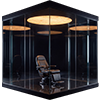 Multisensory Regeneration Cabin
 IHHT altitude training
 HBOT Oxygen chamber
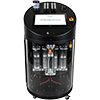 Water Plasma Application
 Red Light Therapy
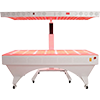 Photobiomodulation
 Cell regeneration
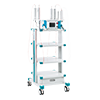 Endolaser
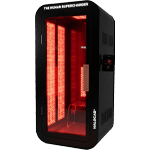 HaloCab Human Supercharger
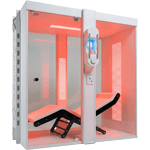 Salt & Red Light
 Vibroacoustics
 Magnetic Field Applications
 Back therapy system
 WeberBrain
 Pelvic floor training
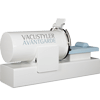 iFlow® IVT Therapy
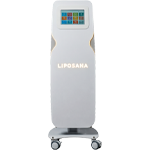 Frequency ultrasound
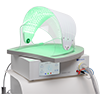 Dermio Care Plus
 Lounge equipment
 Health of Point Diagnostics
 Body analysis
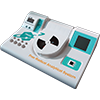 FRAS 5
 Mobile HRV measurement
Kegel chair for clinics
A kegel chair can help clinics, physiotherapy and medical practices and wellness operators add a modern pelvic floor offering without invasive treatment pathways. HF Concepts supports you from the first evaluation to the final rollout – independently, realistically and with a clear eye on clinical fit, compliance and business viability.

What a kegel chair is
If you are considering kegel chair therapy for your facility, we help you compare technologies, define the right use case, plan implementation and build a service concept that is credible for patients and practical for your team. For practical implementation guidance, see Pelvic floor trainer in medical practice.
A kegel chair is a seated pelvic floor stimulation system used in medical, therapy and wellness settings. You may also see terms such as pelvic floor machine chair, kegel machine chair or kegel exercise chair, which is why the distinction between Kegel chair vs pelvic floor machine chair often comes up during research. In many searches, “kegel chair” is used as a generic label for systems such as Emsella. The common idea is simple: the patient sits on the chair fully clothed while the device stimulates repeated pelvic floor contractions.
For providers, the real question is not just what the chair is called, but whether the technology matches your target patients, regulatory framework and service model. A strong concept starts with those three points, not with a brand pitch.

How kegel chair therapy works
Most kegel chair systems use Electromagnetic pelvic floor training to activate the pelvic floor muscles without internal probes or hands-on exercise coaching during the session. The goal is to trigger rapid, repetitive contractions that are difficult for many people to reproduce consistently with voluntary Kegel exercises alone. That non-invasive format is one of the main reasons these systems attract attention from clinics and premium wellness operators.
Manufacturers often describe a session as the equivalent of thousands of Kegel contractions. That headline is useful for understanding treatment intensity, but it should not replace clinical judgement. What matters more is how the stimulation is delivered, which indications are supported by the device documentation, and how the therapy is integrated into assessment, follow-up and patient education.
From an operator perspective, the appeal is clear: sessions are standardised, staffing demands can be manageable, and the patient experience is generally straightforward. At the same time, outcomes are never created by the device alone. Patient selection, contraindication screening, staff training and realistic expectation setting remain essential if you want a kegel chair to become a reliable part of your service line. For an overview of device options, indications and clinic use cases, see Electromagnetic pelvic floor devices.
Where clinics typically position this therapy
Pelvic floor symptoms and patient pathways
Kegel chair therapy is most commonly discussed in relation to pelvic floor weakness and urinary symptoms. The strongest patient interest usually centres on convenience, comfort and the possibility of improving symptoms without surgery or downtime. For providers, it is important to define exactly where the technology fits in your pathway.
Stress urinary incontinence
This is the most established use case in market-facing content. Stress urinary incontinence typically involves leakage during coughing, sneezing, laughing, lifting or exercise. Clinics often consider a pelvic floor chair when they want a non-invasive option for selected patients who may benefit from structured pelvic floor activation.
Urge and mixed symptoms
Some providers also position a kegel chair for urge-related or mixed symptoms, especially where bladder control and pelvic floor support overlap. These cases usually require more careful assessment, because urgency can have multiple causes and not every patient with bladder symptoms is an obvious match for chair-based stimulation.
Postpartum, menopausal and male pelvic floor cases
Interest is also high among women after childbirth, during menopause or after periods of reduced pelvic floor strength. In selected settings, providers may assess men with pelvic floor weakness or certain post-treatment support needs as well. Claims around intimate wellness, vaginal laxity or broader pelvic health concerns should always stay within the device indication, the practitioner’s competence and the local medical advertising rules.
Treatment sessions, suitability and expectations
What a treatment session usually looks like
A typical kegel chair therapy session lasts around 20 to 30 minutes. The patient remains fully clothed, sits in a defined position and the intensity is increased gradually based on comfort and protocol. The sensation is usually described as firm pelvic floor pulsing or lifting rather than pain, and there is generally no downtime afterwards.
Most providers use the chair as a course of treatment rather than a one-off session. A commonly marketed protocol is several treatments over a period of three to six weeks, followed by reassessment and, in some cases, maintenance sessions. The exact schedule should depend on the device, the patient profile and your clinical workflow.
Suitability, contraindications and realistic expectations
A kegel chair is not a one-size-fits-all answer for every pelvic floor complaint. More contraction is not always better. If symptoms are driven by pelvic pain, overactivity, poor coordination, prolapse irritation or a more complex gynaecological, neurological or urological picture, chair-based stimulation may be insufficient or may need to be avoided altogether. In those cases, pelvic floor physiotherapy, medical work-up or combined care may be the better first step.
Contraindications vary by device, so clinics should always follow the manufacturer’s instructions for use. Common screening points may include pregnancy, pacemakers or other implanted electronic devices, relevant metal implants, and other factors that make electromagnetic stimulation unsuitable. Good implementation always includes a clear intake process, informed consent, escalation criteria and referral pathways.
It is also important to communicate evidence responsibly. Current evidence is often presented most strongly around stress urinary incontinence symptoms. Broader benefit claims may appear in the market, but they should be handled carefully and only where documentation, indication and professional judgement clearly support them. That balance protects patients and strengthens your long-term reputation.
What to assess before you invest in a pelvic floor chair
If you are evaluating Kegel chair cost and ROI for clinics, the purchase price is only one part of the decision. The stronger question is whether the full concept will work in your setting.
| Area | What to check before you buy |
|---|---|
| Clinical positioning | Define which symptoms, referral sources and patient groups you want to serve, and confirm that the device indication supports that plan. |
| Workflow | Map intake, screening, treatment scheduling, documentation, follow-up and referral steps so the chair fits smoothly into daily operations. |
| Compliance | Check CE and MDR status, approved claims, staff responsibilities, consent wording and how you will market the service within local rules. |
| Training | Make sure your team understands patient selection, contraindications, device handling, expectation management and when to escalate or refer. |
| Commercial model | Look at utilisation, treatment packages, financing options, launch strategy and whether the service supports your broader positioning. |
| Patient experience | Consider room concept, privacy, comfort, communication and how the service feels from first consultation to completion. |
When these points are handled early, a pelvic floor chair becomes easier to evaluate as a real business case rather than an isolated equipment purchase.
If you are not ready for a full purchase, see Buy, lease or rent wellness equipment for practical acquisition paths. To set realistic session targets and coverage thresholds, build your model on conservative utilisation assumptions.
How HF Concepts supports your project
HF Concepts is a manufacturer-independent health-tech partner for clinics, therapy centres and premium wellness operators. We do not start with a single device and try to force a fit. We start with your concept, your patient pathway and your commercial goals, then identify the technology that makes sense.
From Berlin, we support projects across Germany, Austria and Switzerland with technology selection, implementation planning, installation coordination, staff onboarding and market positioning. The result is a kegel chair concept that is practical to run, aligned with compliance requirements and built for sustainable service growth.
- Cryo chamber systems
- Thermal contrast and ice baths
- Dry floating and vibroacoustics
- Red light and photobiomodulation
- IHHT, HBOT, compression and body analysis
Frequently asked questions
Does a kegel chair work?
It can support symptom improvement in selected patients, especially when the indication, device and treatment plan are well matched. Evidence is usually communicated most strongly around stress urinary incontinence symptoms. It should not be presented as a universal fix for every pelvic floor problem.
Is a kegel chair the same as doing Kegel exercises?
No. Manual Kegel exercises rely on the patient actively contracting the pelvic floor, while a kegel chair triggers contractions through device-based stimulation. That can make treatment more standardised, but it does not automatically replace assessment, coaching or broader pelvic floor therapy where those are needed.
How many sessions are usually recommended?
Many providers market a series of around six sessions over three to six weeks, followed by reassessment. Some patients may notice changes earlier, while others need a broader care plan or ongoing maintenance. The right schedule depends on the device protocol and the patient profile.
Is kegel chair therapy painful?
It is generally described as non-invasive and tolerable, with a strong contraction or pulsing sensation rather than pain. Intensity is typically adjusted during the session. If a patient has pain, unusual discomfort or a condition that makes stimulation unsuitable, the treatment plan should be reviewed immediately.
Who should not use a kegel chair?
Suitability depends on the device and the patient’s medical history. Common exclusion points may include pregnancy, certain implanted electronic devices and other contraindications listed by the manufacturer. Patients with pelvic pain, significant overactivity or more complex pelvic floor dysfunction may also need a different pathway.
How much does a kegel chair cost for a clinic?
There is no single answer. Kegel chair cost depends on the device brand, certification, warranty, training package, service support, financing model and launch requirements. For operators, the key metric is total concept cost versus realistic utilisation and positioning, not headline equipment price alone.
Is kegel chair therapy reimbursed?
Coverage depends on the country, payer, indication and provider setting. In many wellness-led or private-pay models, treatment is offered outside standard reimbursement pathways. Clinics should verify local rules carefully and avoid making reimbursement promises before they are confirmed.
What is the difference between Emsella and a generic kegel chair?
Emsella is a specific brand name, while kegel chair is a generic search term people use for this category of pelvic floor chair, which also includes systems such as PelviPower. When comparing systems, focus on indication, compliance status, evidence, service support, training and the commercial fit for your clinic rather than the label alone.
Assess your kegel chair project
If you are assessing a kegel chair for a clinic, physiotherapy practice or wellness-medical concept, HF Concepts can help you compare options objectively and build a rollout plan that works clinically, operationally and commercially.