
 Electric cryo chamber
 Thermal contrast
 Ice bath 2.0
 Dry Floating
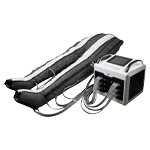 Lymphatic drainage
 Multisensory Regeneration Cabin
 IHHT altitude training
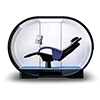 HBOT Oxygen chamber
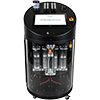 Water Plasma Application
 Red Light Therapy
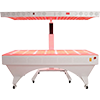 Photobiomodulation
 Cell regeneration
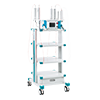 Endolaser
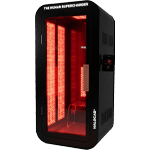 HaloCab Human Supercharger
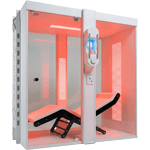 Salt & Red Light
 Vibroacoustics
 Magnetic Field Applications
 Back therapy system
 WeberBrain
 Pelvic floor training
 iFlow® IVT Therapy
 Frequency ultrasound
 Dermio Care Plus
 Lounge equipment
 Health of Point Diagnostics
 Body analysis
 FRAS 5
 Mobile HRV measurement
HRV monitor
If you want to measure heart rate variability in a practical, credible way, an HRV monitor is one of the most useful tools available. For clinics, performance facilities, spas, recovery spaces and longevity concepts, HRV monitoring devices can add structured insight into recovery, stress load and daily readiness without relying on exaggerated claims.

Make recovery, stress and readiness measurable
HRV, or heart rate variability, describes the variation in time between individual heartbeats. A heart rate variability monitor captures those intervals and translates them into trends that can support recovery tracking, stress awareness, sleep analysis and training decisions. Depending on the device, the signal may come from ECG, optical sensors or guided finger measurements. The real value is not one isolated score, but consistent measurement over time and interpretation against the user’s own baseline.

HRV and heart rate are not the same
Heart rate tells you how fast the heart is beating. HRV tells you how much variation exists between beats. That variation is influenced by the autonomic nervous system and is often used as a proxy for recovery status, resilience and current stress load.
A low resting heart rate does not automatically mean high HRV, and a single low HRV reading does not automatically mean something is wrong. Sleep debt, alcohol, illness, travel, hard training, emotional stress and even measurement timing can all shift the result. That is why the best HRV monitor is usually the one that helps you build a reliable long-term trend using a standardized HRV measurement protocol instead of encouraging one-off interpretation.
Why HRV monitoring adds value in practice
Recovery, stress and readiness in practice
Most people searching for the best HRV monitor want one of four things: better training decisions, clearer recovery insights, more awareness of daily stress, or a more data-led wellness offer. In practice, HRV monitoring can support all four when it is used in a structured way with clear HRV monitoring protocols for wellness centers.
Recovery and training load
In performance settings, HRV is often used to understand whether a user appears well recovered or under more strain than usual. That can help coaches and operators adjust training intensity, recovery sessions or scheduling. It is especially relevant when clients combine strength work, endurance training, travel and inconsistent sleep.
Stress resilience and daily readiness
HRV can also support day-to-day stress awareness. When measurement conditions are consistent, trends may show how work pressure, long shifts, poor sleep or emotional stress influence recovery capacity. This makes HRV wearables relevant not only for athletes, but also for executive programs, corporate wellness concepts and preventive health offers.
Sleep and wellness insights
Many HRV monitoring devices are paired with sleep and resting data. That gives users a broader picture of routine, recovery and readiness without pretending to diagnose medical conditions. In many cases, the strongest value comes from combining HRV with sleep quality, resting heart rate, subjective energy and lifestyle context.
A useful metric, not a standalone diagnosis
HRV should always be interpreted carefully. Baselines differ widely between individuals, and more data is not automatically better data. For professional providers, the opportunity is not to overpromise, but to use HRV monitoring as part of a science-based service that supports behavior change, better conversations and more personalised programming.
How to choose the right HRV monitor
If you are comparing the best HRV tracker for a professional setting, accuracy is only one part of the decision. The right heart rate variability device also has to fit the measurement goal, the user journey and the commercial concept behind it.
Accuracy and sensor type
ECG-based chest straps are typically the most accurate option for HRV measurement outside a clinical environment. Optical sensors in watches and wrist devices are more convenient, but they can be more sensitive to motion, fit and skin conditions. Finger sensors and guided app measurements can work well for structured spot checks when used consistently.
Continuous tracking or scheduled measurement
A continuous HRV monitor is useful when you want overnight trends or passive daily data. A spot-check workflow is often better when you want fast onboarding, simple routines and lower device complexity. The right choice depends on whether you prioritise depth of data or ease of adherence.
User experience and long-term adherence
The best HRV monitor is the one people will actually use correctly. Rings and watches are easy to wear. Chest straps often deliver stronger signal quality but lower comfort for routine use. If your audience is new to data-driven wellness, a simpler HRV tracking device can outperform a technically stronger solution that nobody sticks with.
Compliance, privacy and operational fit
For providers in Germany and the wider EU, it is also important to check CE marking where applicable, intended use and, where relevant, MDR-related classification and claims. You should also review data flows, app permissions and GDPR-compatible handling of personal health-related data. Beyond the device itself, successful implementation depends on onboarding, reporting, staff training and a clear role for HRV within your overall service and wider diagnostic solutions.
Which HRV monitor type fits your concept
Chest strap HRV monitors
A chest strap is usually the strongest option when measurement quality is the top priority. It fits coaching, performance testing and structured recovery checks particularly well, especially when you need dependable interval data for repeated use.
Smartwatches and fitness trackers
A heart rate variability watch or smartwatch with HRV is often the most accessible entry point. It can be a good fit when users already wear a device and want HRV alongside sleep, activity and resting heart rate. For many wellness concepts, this balance of convenience and familiarity is a major advantage.
Rings, wristbands and other wearables
Rings and lightweight HRV wearables are popular for overnight or low-friction tracking. They suit hospitality, longevity and executive wellness concepts where comfort, aesthetics and simple daily use matter just as much as data availability.
Finger sensors and guided app measurements
Finger-based devices and app-led measurements can work well for structured check-ins, biofeedback sessions or lower-complexity deployment. They are especially useful when 24/7 wear is not necessary and you want a practical way to capture regular HRV readings without asking users to adopt another full-time wearable.
HRV monitor consulting for clinics, spas and performance facilities
HF Concepts helps you compare options in our HRV tracker vs heart rate variability monitor guide from a manufacturer-independent perspective. We support technology selection, workflow design, installation planning, staff onboarding and business integration, so you choose a solution that fits your users, your budget and your regulatory environment.
HF Concepts helps you turn HRV monitoring from a promising technology into a workable service. As a manufacturer-independent partner, we compare device categories, software workflows and operational models based on your goals, not on a single brand agenda.
We support concept development, technology selection, implementation planning, installation coordination, team training and market positioning. Whether you are building a recovery zone, a longevity studio, a preventive health program or a premium wellness experience, we help you choose HRV monitoring devices that are credible, practical and commercially viable.
From Berlin, we support projects across Germany and the DACH region with a science-based, business-focused approach.
- Cryo chamber systems
- Thermal contrast and ice baths
- Dry floating and vibroacoustics
- Red light and photobiomodulation
- IHHT, HBOT, compression and body analysis
Frequently asked questions about HRV monitors
What is a normal HRV level?
There is no universal normal HRV that applies to everyone. Age, fitness, sleep, stress, illness, medication and measurement method all influence the number. What matters most is your personal baseline and the trend over time, not comparison with someone else.
Can I measure HRV at home?
Yes. Many people measure heart rate variability at home with a chest strap, smartwatch, ring, finger sensor or a mobile HRV measurement setup. Home measurement is most useful when the routine is consistent, such as taking a reading at the same time each morning or tracking overnight with the same device.
What is the most accurate HRV monitor?
In most non-clinical settings, ECG-based chest straps are considered the most accurate option for HRV measurement. They are commonly preferred when precise interval data matters more than convenience. For many everyday wellness applications, however, a high-adherence wearable can still be the smarter choice.
Do smartwatches measure HRV well enough?
Often, yes, if the goal is general trend tracking rather than the highest possible measurement precision. Many smartwatches, including Apple Watch and Garmin models, can provide HRV-related insights, but data quality and interpretation depend on the sensor, timing and software environment.
Is continuous HRV monitoring necessary?
Not always. Continuous HRV monitoring can be useful for sleep and recovery trends, but many users get enough value from regular spot checks. If you mainly need a simple daily readiness signal, a structured short measurement can be more practical than constant tracking.
What do cardiologists say about HRV?
HRV is widely recognised as a meaningful physiological marker, but it should not be treated as a standalone diagnosis. Medical professionals typically assess context, symptoms and broader clinical data. For wellness and performance use, HRV is best understood as one useful signal within a bigger overall picture.
Plan the right HRV monitoring solution for your business
If you are evaluating an HRV monitor, HRV tracker or broader heart rate variability device portfolio, HF Concepts helps you make a sound decision from both a health-tech and business perspective. We help you identify the right use case, compare the right technology and implement a solution your team and clients will actually use. If you want a clear starting point, begin with a free initial consultation.