
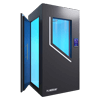
 Electric cryo chamber
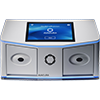 Thermal contrast
 Ice bath 2.0
 Dry Floating
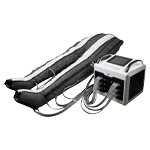 Lymphatic drainage
 Multisensory Regeneration Cabin
 IHHT altitude training
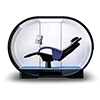 HBOT Oxygen chamber
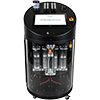 Water Plasma Application
 Red Light Therapy
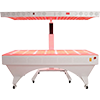 Photobiomodulation
 Cell regeneration
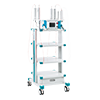 Endolaser
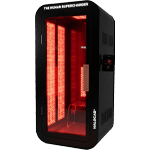 HaloCab Human Supercharger
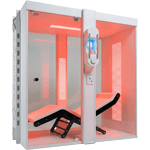 Salt & Red Light
 Vibroacoustics
 Magnetic Field Applications
 Back therapy system
 WeberBrain
 Pelvic floor training
 iFlow® IVT Therapy
 Frequency ultrasound
 Dermio Care Plus
 Lounge equipment
 Health of Point Diagnostics
 Body analysis
 FRAS 5
 Mobile HRV measurement
Frequency ultrasound therapy devices
If you are comparing frequency ultrasound therapy devices, the real decision is not simply 1 MHz or 3 MHz. You need a system that matches your treatment goals, your team, your audience and the level of medical or wellness integration your concept allows. HF Concepts supports clinics, physiotherapy practices, recovery operators and premium wellness providers with manufacturer-independent selection, implementation and positioning of advanced health technologies.

How treatment frequency shapes depth and energy delivery
In therapeutic ultrasound, frequency describes how many sound-wave cycles are delivered per second. Standard rehabilitation and physiotherapy systems usually operate at 1 MHz or 3 MHz. That setting matters because it changes how quickly the energy is absorbed and how deep it is likely to act. In simple terms, lower frequency travels deeper before it is absorbed, while higher frequency is taken up faster in more superficial tissue.
There is also a second meaning of frequency that often creates confusion: treatment frequency in the sense of session schedule. Wave frequency is the device setting in megahertz. Session frequency is how often a patient or client receives treatment. Good device selection starts by keeping those two ideas apart.
Frequency should never be judged alone. Real treatment dose also depends on pulsed or continuous delivery, output intensity, applicator size, treatment time, movement technique and the intended use defined by the manufacturer. That is why two devices with the same MHz setting can perform very differently in practice.

1 MHz and 3 MHz ultrasound compared
Most providers searching for frequency ultrasound therapy want one clear answer: when should you choose 1 MHz and when is 3 MHz the better option? The practical difference is depth and rate of absorption, not quality. One is not universally better than the other.
| Parameter | 1 MHz ultrasound | 3 MHz ultrasound |
|---|---|---|
| Typical use | Often selected when the target tissue lies deeper | Often selected when the target tissue is more superficial |
| Energy absorption | Absorbed more gradually | Absorbed more quickly |
| Practical depth rule | Common choice for deeper targets, often beyond roughly 2 cm | Common choice for more superficial targets, often within roughly 2 cm |
| Common treatment focus | Larger or deeper soft-tissue targets depending on protocol | Shallower structures where faster surface absorption is useful |
| What it does not tell you | It does not define intensity, duty cycle, treatment time or total dose on its own | It does not define intensity, duty cycle, treatment time or total dose on its own |
That rough 2 cm rule is helpful, but it is still only a rule of thumb. Tissue type, treatment objective, device output and coupling quality all influence what happens in practice. If you are choosing between 1 MHz and 3 MHz ultrasound for a clinic or wellness concept, it is usually smarter to think in terms of how frequency ultrasound therapy is applied, workflow and staff competence rather than treating MHz as a stand-alone buying criterion.
Frequency is only one part of the treatment dose
Duty cycle, intensity and treatment workflow
Frequency matters, but outcomes depend on the full dose. If you want reliable protocols and a device that your team can use confidently, you need to understand the other settings that shape the treatment effect.
Duty cycle and pulsed mode
Duty cycle describes how long the ultrasound output is on versus off during pulsed delivery. Continuous mode delivers energy without pauses and is commonly chosen when a stronger thermal effect is desired. Pulsed mode reduces average energy delivery and is often considered when you want a lower heating effect. A device that offers only one simplified mode gives you less clinical flexibility.
Intensity and depth loss
Intensity is the power level delivered at the treatment head, but that does not mean the same amount of energy reaches the target tissue. Some energy is absorbed before it gets deeper. A superficial target treated at 3 MHz may require a very different strategy than a deeper target treated at 1 MHz, even when the overall treatment goal sounds similar.
Treatment area, head size and time
The size of the treatment area also changes the dose. If the area is much larger than the applicator, you need more time to cover it properly. Smaller heads can improve precision, but they also change workflow. In a busy practice or recovery space, this affects staff capacity, client throughput and treatment consistency. Good devices make this easier with clear head-size options, intuitive controls and protocol guidance that matches the intended use.
Why copy-paste settings are a weak strategy
A well-designed therapeutic ultrasound system should support professional decision-making rather than encourage blind presets. Evaluate not just the frequency options, but the full protocol logic: who will use the device, in what setting, with what training, and under which medical or wellness positioning.
Thermal effects, treatment schedules and evidence
Thermal and non-thermal effects
Ultrasound therapy is usually discussed in terms of thermal and non-thermal effects. Thermal effects are linked to tissue heating and may support local circulation, reduce the feeling of stiffness and prepare tissue for other therapy steps in the right context. Non-thermal effects are commonly described through mechanisms such as cavitation and acoustic microstreaming, which relate to mechanical activity at tissue level rather than heat alone.
In real practice, these categories are not completely separate. Frequency, duty cycle, intensity and treatment time interact. A higher frequency such as 3 MHz is absorbed faster in superficial tissues, while a lower frequency such as 1 MHz is usually chosen when the goal sits deeper. Match device capability to clear indications, professional training and compliant communication.
If you are comparing systems promoted for sonophoresis, cell regeneration applications or advanced automation, check carefully whether those claims are supported by the device’s intended use, CE marking and documentation. In the EU, the regulatory context is as important as the technology itself. To streamline due diligence, see the EU MDR checklist for device buyers.
How often can ultrasound therapy be used?
There is no universal schedule. The right treatment frequency depends on the indication, tissue state, device class, output settings, practitioner judgment and the manufacturer’s instructions for use. Some protocols are used more intensively over a short period, while others are spaced out as part of a broader rehabilitation or wellness plan.
For providers, the practical takeaway is simple: build treatment schedules into your operating concept instead of relying on generic internet advice. Your team should know when ultrasound is appropriate, when it needs supervision, how it fits with manual therapy or exercise, and how to document usage consistently.
Does ultrasound therapy work?
Ultrasound therapy can be useful, but it should be presented realistically. Evidence varies by indication, treatment protocol and device category. In musculoskeletal practice, some studies report benefits for pain management, tissue heating or functional support, especially when ultrasound is part of a wider treatment plan. Other reviews are more cautious and show mixed or limited effects in certain applications.
Standard therapeutic ultrasound devices in the 1 MHz and 3 MHz range, low-intensity pulsed ultrasound systems and high-intensity focused ultrasound are different technical and regulatory categories. Evidence from one group should not be used to advertise another as if they were interchangeable.
Frequently asked questions about frequency ultrasound therapy
What is the frequency of ultrasound therapy?
In standard therapeutic ultrasound, the most common operating frequencies are 1 MHz and 3 MHz. These settings describe the sound-wave frequency delivered by the device, not how often sessions are performed.
What is the difference between 1 MHz and 3 MHz ultrasound?
1 MHz is generally selected for deeper targets because its energy is absorbed more gradually. 3 MHz is absorbed faster and is commonly chosen for more superficial tissues. The right choice still depends on the full treatment dose.
How frequently can you use ultrasound therapy?
Session frequency depends on the indication, protocol goal, device class and the manufacturer’s instructions for use. There is no single schedule that fits every case, so providers should work from trained, documented protocols.
Does ultrasonic therapy really work?
It can be useful when the indication, protocol and device are well matched. Evidence is mixed across musculoskeletal uses, which is why ultrasound is often most valuable as part of a broader treatment strategy rather than as a stand-alone promise.
Is high frequency ultrasound safe?
When the device is used within its intended purpose, by trained staff and with proper screening for contraindications, therapeutic ultrasound is generally considered safe. Risk rises when settings are inappropriate or the device is marketed beyond its approved use.
Is continuous or pulsed ultrasound better?
Neither is universally better. Continuous mode is commonly chosen when a stronger thermal effect is desired. Pulsed mode is used when lower average energy delivery is the goal. The correct setting depends on treatment objectives and tissue status.
Can HF Concepts help us choose CE/MDR-ready ultrasound devices?
Yes. HF Concepts provides manufacturer-independent consulting to help clinics, wellness operators and performance facilities compare ultrasound therapy devices, assess regulatory documentation and implement a solution that fits both operations and business goals.
Start with independent guidance
If you want to explore frequency ultrasound therapy as part of a new or existing offering, HF Concepts can help you compare the options, define the right role for the technology and move from idea to implementation with a clear plan. For a structured vendor comparison before purchase, consider our device procurement advisory.
- 1 MHz and 3 MHz treatment frequency options
- Continuous and pulsed delivery modes
- Applicator sizes and protocol guidance
- CE/MDR documentation and intended-use review
- Training, service and lifecycle planning
Choosing the right frequency ultrasound therapy device
If you are evaluating frequency ultrasound therapy devices for a clinic, physiotherapy centre, performance facility or premium wellness concept, the shortlist should be based on more than brochure language. A good comparison looks at clinical relevance, day-to-day operations and long-term economic fit.
Clinical fit
Start with the actual treatment options. Does the system offer both 1 MHz and 3 MHz ultrasound, or only one frequency? Can the user adjust continuous and pulsed delivery? Is output control precise enough for professional protocols? Are different applicator sizes available? These details shape whether the device is flexible enough for your intended audience and services.
Operational fit
Look closely at usability. A technically strong device can still fail if the interface is confusing, the handpiece is uncomfortable, or the cleaning and maintenance routine slows the team down. Training, service availability, replacement parts and onboarding matter. If the system stores user or client data, GDPR-ready processes should also be part of the evaluation. Plan for uptime with lifecycle management for therapy devices.
Commercial fit
Check whether the device works as a business asset. How easily can it be integrated into your patient journey or wellness menu? Does it support reimbursable therapy, self-pay services or both? How many sessions can your team deliver realistically? In the EU, you also need clarity on CE/MDR status, intended use, contraindications and compliant marketing boundaries. Align financing with your model through wellness technology financing advisory.
Independent support from HF Concepts
HF Concepts helps you evaluate and implement advanced health technologies without being locked into one manufacturer viewpoint. We begin with your concept, your market and your business goals. That manufacturer-independent approach is especially valuable when you are comparing therapeutic ultrasound 1 MHz and 3 MHz solutions across multiple suppliers.
From Berlin, we support projects across Germany and the wider DACH market with science-based consulting, technology selection, compliance-aware decision support, installation planning, staff training and market positioning. Whether you are building a physiotherapy upgrade, a recovery zone or a broader longevity and wellness concept, the aim is to choose technology that is credible, future-ready and commercially viable.