
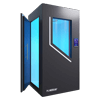
 Electric cryo chamber
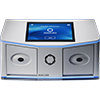 Thermal contrast
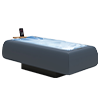 Ice bath 2.0
 Dry Floating
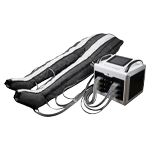 Lymphatic drainage
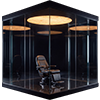 Multisensory Regeneration Cabin
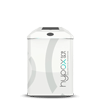 IHHT altitude training
 HBOT Oxygen chamber
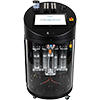 Water Plasma Application
 Red Light Therapy
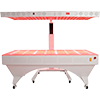 Photobiomodulation
 Cell regeneration
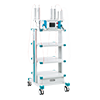 Endolaser
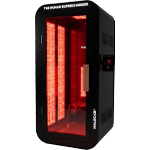 HaloCab Human Supercharger
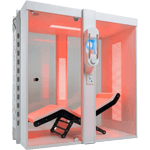 Salt & Red Light
 Vibroacoustics
 Magnetic Field Applications
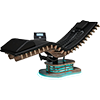 Back therapy system
 WeberBrain
 Pelvic floor training
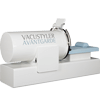 iFlow® IVT Therapy
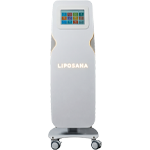 Frequency ultrasound
 Dermio Care Plus
 Lounge equipment
 Health of Point Diagnostics
 Body analysis
 FRAS 5
 Mobile HRV measurement

Short answer
Whether buying, leasing or renting is the better choice rarely depends on the terms. It depends on how predictable your utilization is. Buying is usually the cheapest option over the full term and fits when demand is proven and liquidity is sufficient. Leasing preserves cash and fits when the monthly payment can be covered reliably by contribution margin. Renting or a trial phase fits when demand and concept are still unproven. Rule of thumb: the payment must still be covered at half your planned utilization.
At a glance
Lowest total cost
usually buying
Best for cash flow
leasing or renting
Most flexibility
rental / trial phase
Biggest risk
long commitment without utilization
Stress test
payment covered at 50 % utilization?
Why the financing question comes too early
In first consultations, I often hear “Can I lease this?” before anyone knows who will book the service and how often. That’s understandable: a monthly payment feels more tangible than a demand forecast. Commercially, though, it’s the wrong order.
The most expensive scenario in the longevity business isn’t the overpriced device. It’s the leased device that isn’t being used. You end up with an equipment graveyard with a monthly payment, and a contract you can’t easily exit. So the order is: business model first, then technology, then financing.
Buying, leasing and renting compared
| Criterion | Buy | Lease | Rent / trial |
|---|---|---|---|
| Cash at start | high outflow | low, ongoing payment | low, ongoing rent |
| Ownership | immediate | lessor; transfer depends on contract | lessor |
| Total cost | usually lowest | higher due to financing costs | usually highest per month |
| Commitment | none | fixed term, early exit is costly | short, depends on contract |
| Tax treatment | depreciation over useful life | payments often deductible, contract-dependent | rent as expense |
| Fits when … | demand proven, capital available | margin reliably covers payment | concept still unproven |
Tax treatment depends on the contract structure, jurisdiction and individual case. This article is not tax or financial advice. Please review your options with your tax advisor.
Buying: when it’s the most economical choice
Buying makes sense when three conditions are met: demand is proven (for example through existing clients or a pilot phase), you still have enough liquidity for marketing, staff and fit-out, and you expect to use the technology for many years. Then you save financing costs and stay flexible.
What’s often overlooked: capital spent on equipment is missing elsewhere. A center that puts its entire budget into technology and has nothing left for marketing has a utilization problem built in.
Leasing: what operators should check in the contract
- Term vs. useful life: the lease term should not exceed the realistic use within your concept.
- Service and maintenance: clarify whether maintenance, spare parts and downtime are covered or charged separately.
- Residual value and buyout: what happens at the end of the term, and at what value?
- Early termination: what does it cost if your concept changes?
- Insurance: who carries the risk of damage?
Renting and trial phases: prove demand before you commit
For new facility types or technologies that need explaining, a time-limited phase is often the smartest entry. You pay more per month, but you buy certainty. The key is to run the trial like a real operation: with pricing, a booking system, a staff script and clear metrics. A free trial without pricing proves nothing.
Five questions to answer before you sign
- Is demand proven, or only assumed?
- Does the contribution margin cover the payment at 50 % of planned utilization?
- How long will you realistically use this technology in your concept?
- Are service, maintenance and downtime contractually covered?
- How much liquidity do you need in parallel for marketing, staff and fit-out?
Scenario: does the lease payment pass the stress test?
Illustrative scenario based on assumptions. Not a statement about financing terms and not a real client case.
| Item | Assumption |
|---|---|
| Net investment | €48,000 |
| Assumed lease payment (60 months) | €950 / month |
| Service and insurance | €120 / month |
| Net price per session | €35 |
| Variable cost per session (staff time share, consumables) | €5 |
| Contribution margin per session | €30 |
| Break-even | (€950 + €120) ÷ €30 = 36 sessions / month |
| Planned utilization | 80 sessions / month |
| Stress test at 50 % | 40 sessions × €30 = €1,200 → payment covered |
In this scenario, leasing is robust: even at half utilization there is a surplus of about €130. If break-even were at 60 sessions, the same payment would fail the stress test. A trial phase or a smaller system would then be the more honest choice.
Frequently asked questions
Is it cheaper to buy or lease wellness equipment?
Over the full term, buying is usually cheaper because there are no financing costs. Leasing preserves liquidity instead. What matters is whether the payment can be reliably covered by utilization.
Can you lease longevity and wellness equipment?
Yes, leasing or rental models are available for many professional systems. Terms depend on the device, the lessor and your credit rating.
What lease term makes sense?
The term should not exceed the realistic useful life within your concept. If you plan to restructure your offer in three years, don’t commit to five.
Are lease payments tax-deductible?
In many cases lease payments can be treated as a business expense, but this depends on the contract structure and jurisdiction. Clarify it with your tax advisor.
What happens if leased equipment isn’t used enough?
The payments continue regardless. That’s why you should run a stress test at half utilization before signing. If the numbers don’t hold, a trial phase is usually the better option.
Transparency: HF Concepts sells some of the technologies discussed here. That’s why we assess against clear criteria and advise against a purchase when the fit is missing.
Note: All information is general, non-medical information. The applications discussed are wellness and recovery applications and do not replace medical advice.